
Description
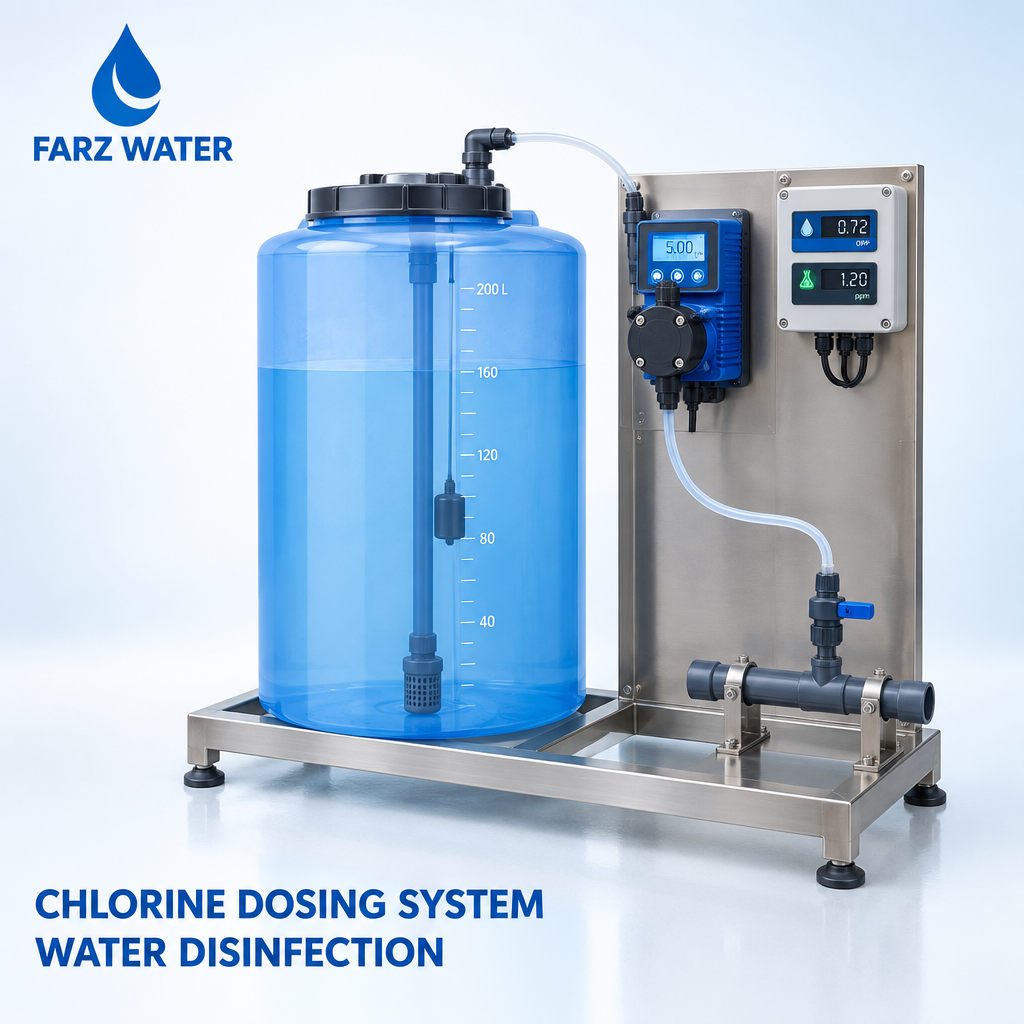
Chlorine dosing system Oman — a metering pump, solution tank and injection assembly that maintains a controlled free chlorine residual in stored or distributed water. It is used on villa and building tanks, labour accommodation, swimming pools, irrigation networks and as the pretreatment disinfection step ahead of filtration.
Why tank water needs dosing here
Water leaves the municipal network with a chlorine residual, but by the time it has sat in a roof tank through an Omani summer that residual is gone. Tank temperatures climb into the range where bacteria multiply comfortably, and any tanker top-up brings its own load. A building can be on treated mains supply and still have a contaminated tap.
Dosing at the tank restores a measured residual so the water stays protected through the distribution pipework, which is exactly where recontamination happens.
How the chlorine dosing system Oman buildings use works
Sodium hypochlorite solution is held in a tank and injected into the line by a metering pump. The dose is set to leave a free chlorine residual of 0.2 to 0.5 mg per litre at the furthest outlet, the range referenced in WHO drinking water guidance. Below that the residual does not protect the network; well above it the water tastes of a swimming pool and residents complain.
On larger installations an ORP or free chlorine controller closes the loop, measuring residual continuously and modulating the pump instead of dosing blind at a fixed rate.
System components
- Electronic metering dosing pump, Emec Italy, chemical-resistant PVDF head
- HDPE solution tank, 100 or 200 litre, with lid and level markings
- PVC suction line with foot valve, strainer and low-level switch
- Injection valve with non-return, mounted into the main line
- Optional ORP or free chlorine controller with probe and holder
- Calibration cylinder for verifying dose rate
Solution strength and consumption
Commercial sodium hypochlorite arrives at 10 to 12 percent and is diluted in the tank to a working strength that suits the pump range. Hypochlorite loses strength in storage, faster in heat, so a drum sitting in a plant room in July is weaker than the label says. We set dosing against a measured residual rather than a calculated one, and re-check at service visits.
Safety and siting
Hypochlorite is corrosive and must never share a bund with acid dosing. The tank goes in a ventilated area with the pump above the liquid level where possible, and the suction line fitted with a low-level switch so the pump does not run dry. On potable duty the injection point sits after any storage and before distribution.
Chlorine or UV
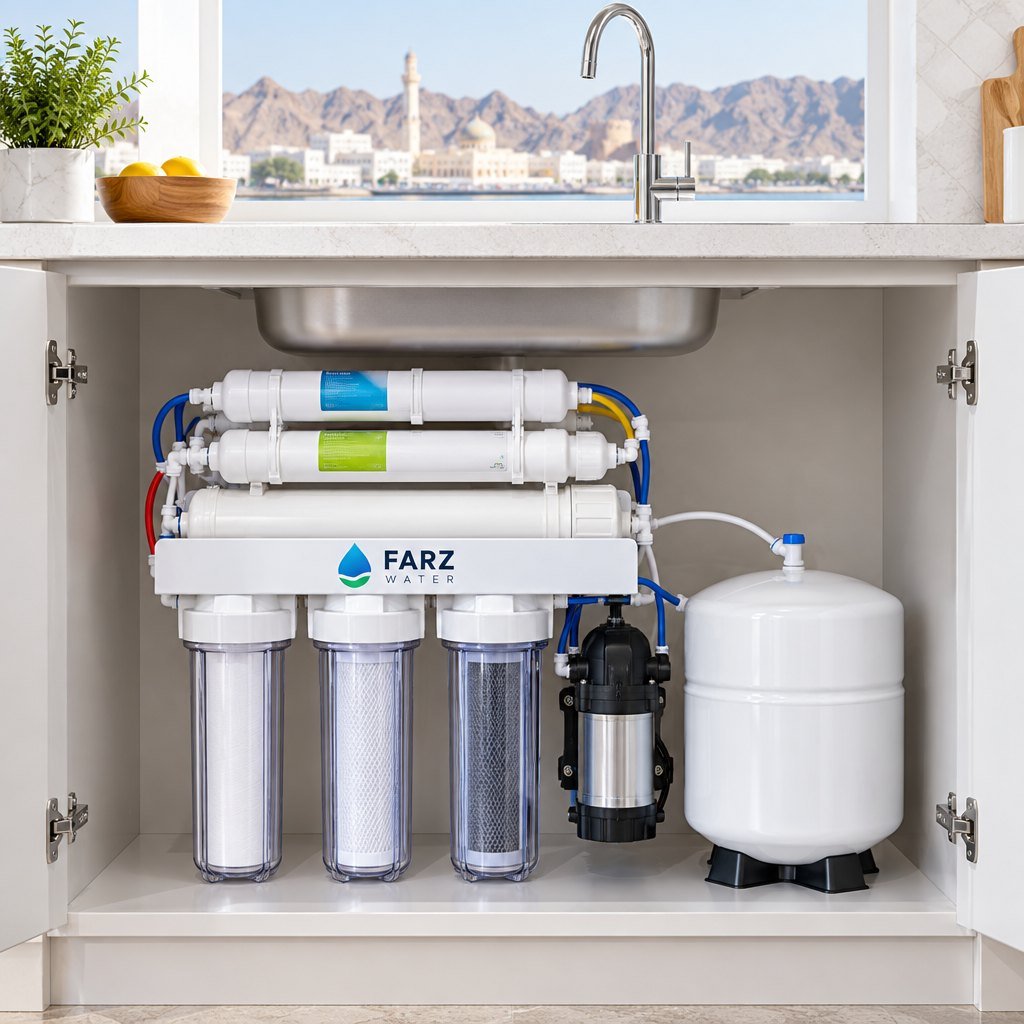
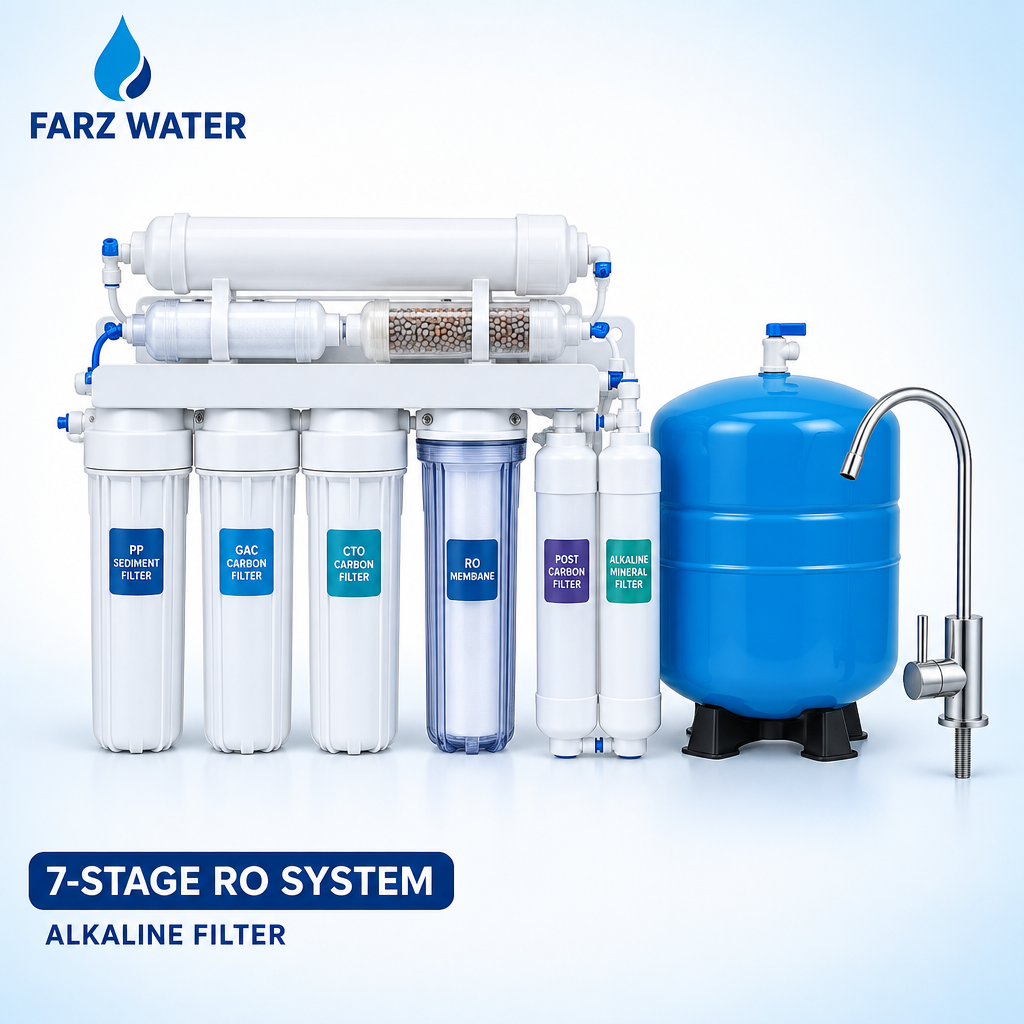
Chlorine leaves a residual that keeps working downstream; UV does not. UV adds nothing to the water; chlorine does. On a building with long pipe runs and storage, chlorine dosing is the right choice, often with UV disinfection as a second barrier at a critical outlet. Where chlorine taste must be removed at the drinking point, a carbon filter or an RO system handles it.
Servicing
Service covers pump head and valve inspection, probe calibration where fitted, residual testing at the far outlet, and tank cleaning. Pump spares, probes and hypochlorite are held in Muscat. We also supply pool chemical dosing controllers for swimming pool duty.
Request a quotation
Tell us the tank volume, daily throughput and whether you need controller feedback, and we will size the chlorine dosing system Oman duty requires and quote supply, installation and commissioning. Call +968 9455 4533 or request a quote.



Reviews
There are no reviews yet.