
Description
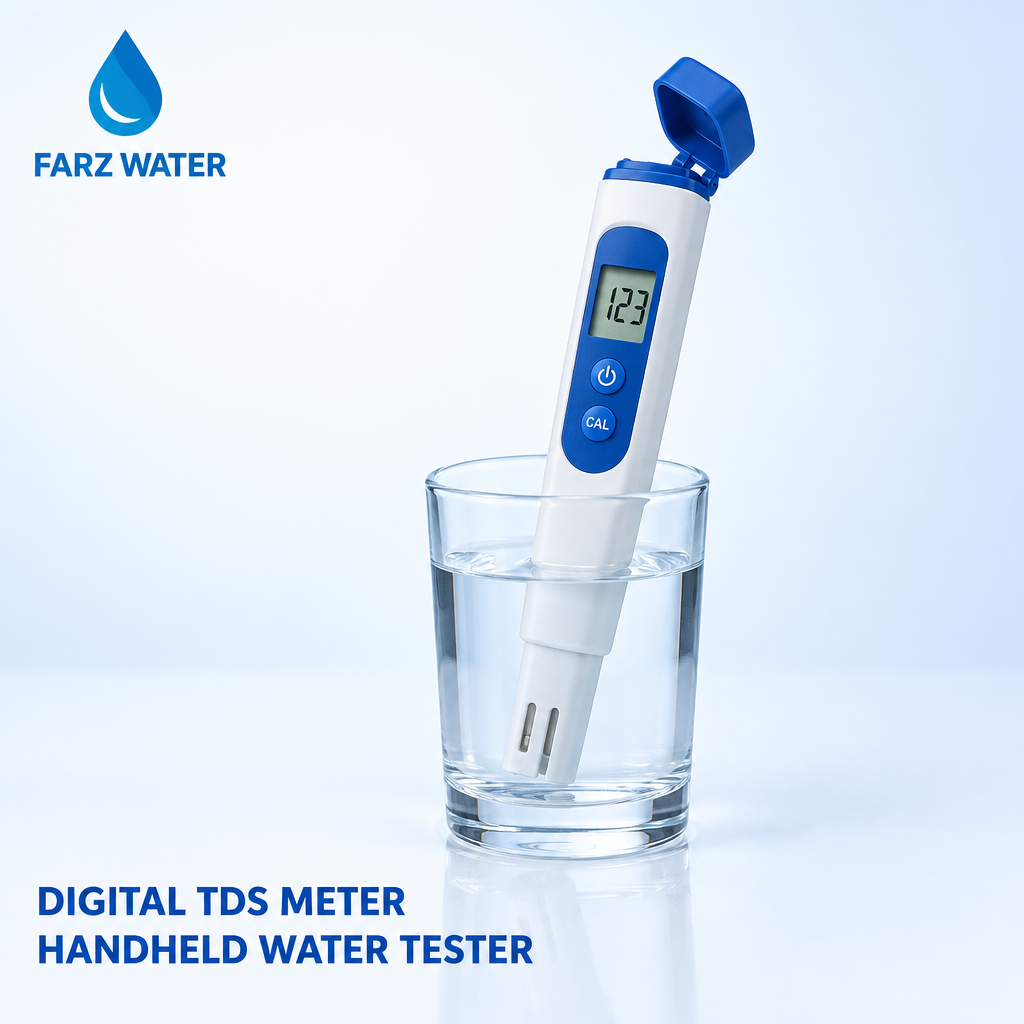
TDS meter Oman — a handheld digital tester that reads total dissolved solids in parts per million in a few seconds. It is the cheapest piece of equipment we sell and the one that settles more arguments than anything else: whether your filter is working, whether the tanker delivered what it charged for, and whether that new membrane was worth buying.
What a TDS meter Oman households use actually measures
The meter passes a small current between two electrodes and measures electrical conductivity, then converts it to an approximate dissolved solids figure. It is reading the total of everything ionic in the water: calcium, magnesium, sodium, chloride, sulphate, nitrate.
What it cannot tell you is which of those, or in what proportion. Two samples both reading 400 ppm can be completely different waters, one benign and one hard enough to destroy a water heater.
Reading the numbers in Omani conditions
- Below 50 ppm – RO permeate, working correctly
- 50 to 150 ppm – RO permeate on high-TDS feed, or very good mains
- 200 to 600 ppm – typical treated municipal supply across Muscat
- 600 to 1,500 ppm – tanker-fed or mixed supply, scale and taste noticeable
- Above 1,500 ppm – borewell water, RO needed for drinking
- Above 3,000 ppm – brackish, needs proper plant design rather than a domestic unit
The WHO drinking water guidelines set no health-based TDS limit, but note that palatability declines above roughly 1,000 ppm. In practice most people in Oman find water unpleasant well before that.
The single most useful habit
Take one reading of your feed water and one of your product water on the day the system is commissioned, and write both on the filter housing with a marker.
Rejection percentage is what those two numbers give you: feed minus product, divided by feed. A healthy RO membrane rejects 95 percent or more. When someone later says the filter is not working, you compare against that baseline instead of guessing. A product reading that has climbed from 25 to 90 ppm is a membrane on the way out; a product reading of 90 ppm that was always 90 ppm is a system working exactly as it did on day one.
Specification
- Range 0 to 9,990 ppm, resolution 1 ppm
- Accuracy plus or minus 2 percent of reading
- Automatic temperature compensation
- Hold function to freeze the reading before lifting the probe
- Auto power-off, replaceable button cells
- Protective cap, pocket sized
Using a TDS meter Oman conditions correctly
Rinse the probe in the sample water before the reading, immerse only to the marked line, stir gently to dislodge air bubbles, and wait for the display to settle rather than reading the first number. Dry the probe after use. Calibration solution is available where a verified reading matters, and for laboratory work a calibrated bench instrument rather than a pocket meter is the correct tool.
What it will not tell you
It says nothing about bacteria, so a reading of 10 ppm proves nothing about whether water is safe to drink. It does not measure hardness specifically, which needs a hardness test kit. It does not detect iron, and it does not see non-ionic contaminants at all.
For sizing any system we still need a full water analysis. A TDS reading tells us which conversation to have; it does not replace the laboratory report.
Related equipment
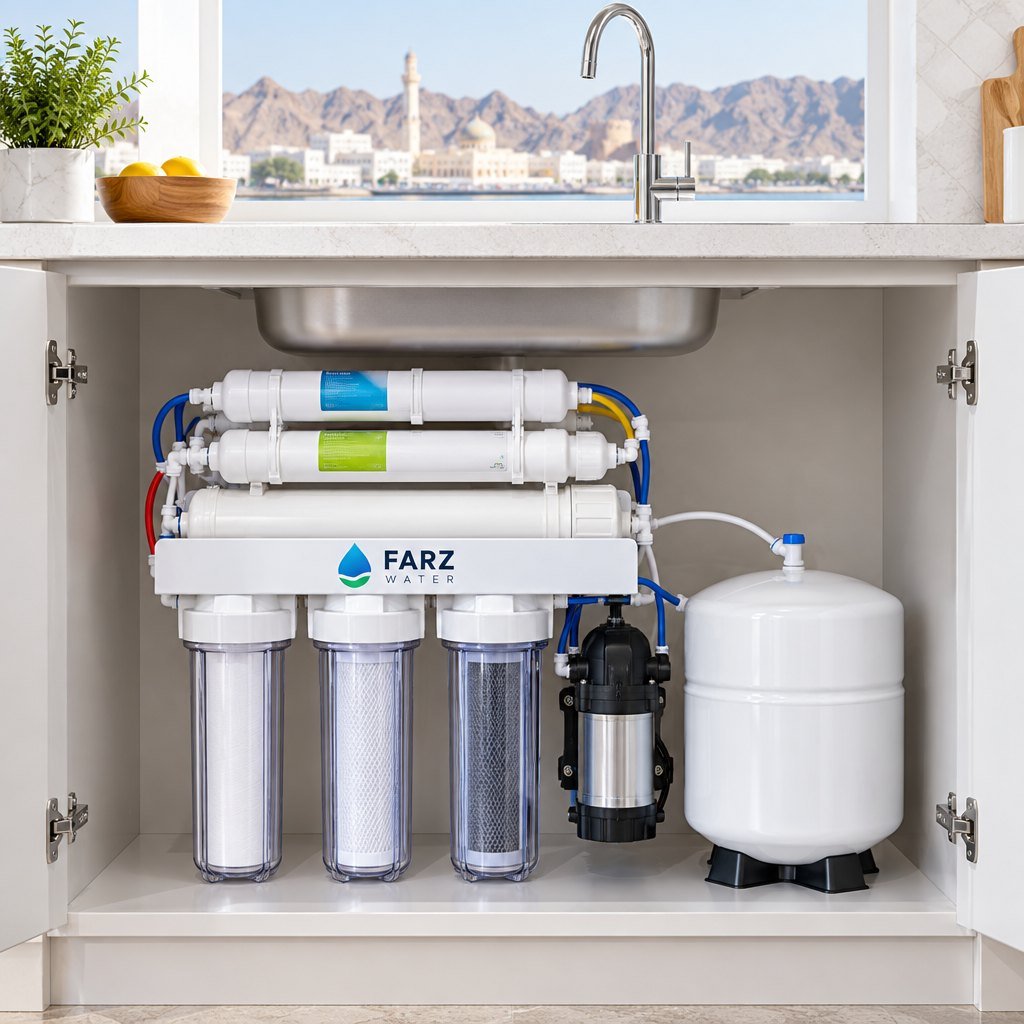
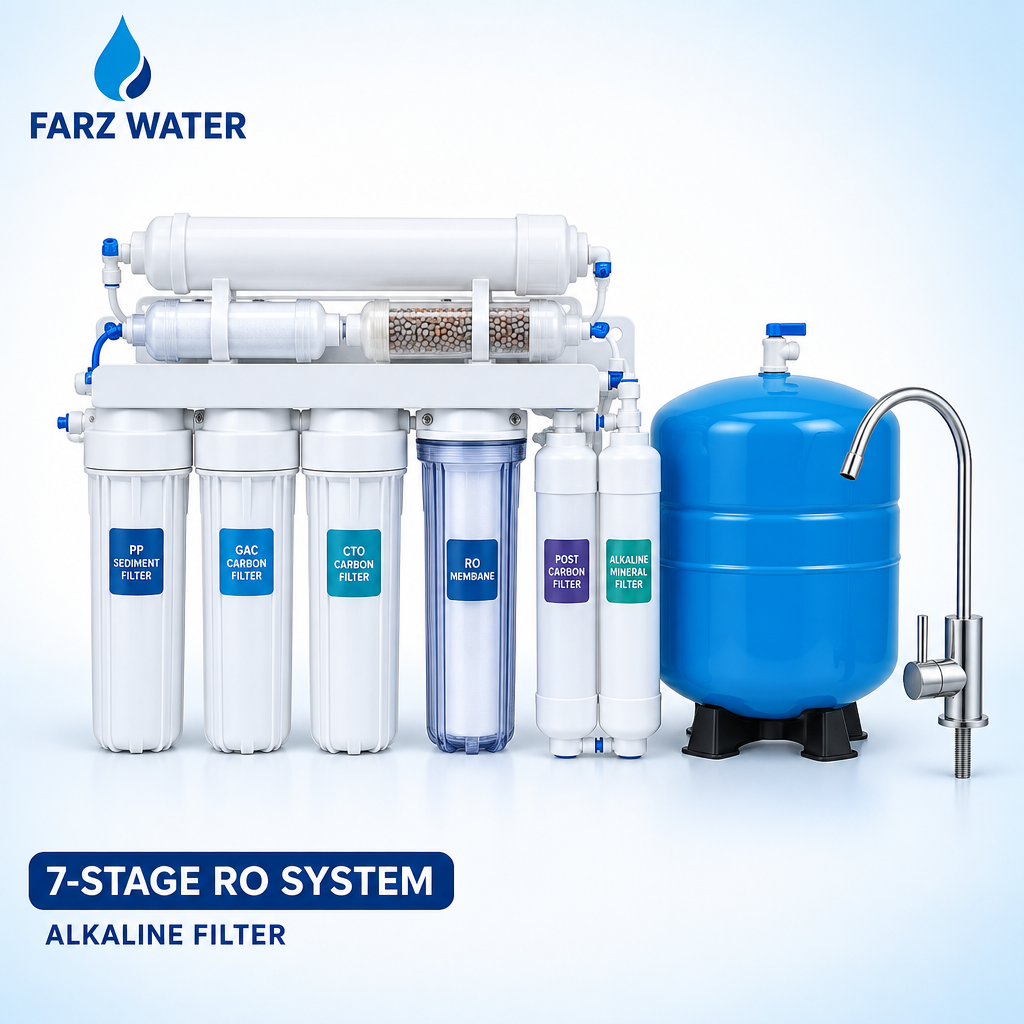
If your reading is high and you want it down for drinking, see the 7-stage alkaline RO system or the tankless RO system. If the problem is scale rather than taste, a water softener is the right tool. Rising product TDS on an existing plant usually means a membrane replacement.
Order a TDS meter Oman delivery
TDS meters are stocked in Muscat and delivered with any service visit or on their own. Call +968 9455 4533 or request a quote.

Reviews
There are no reviews yet.