Description
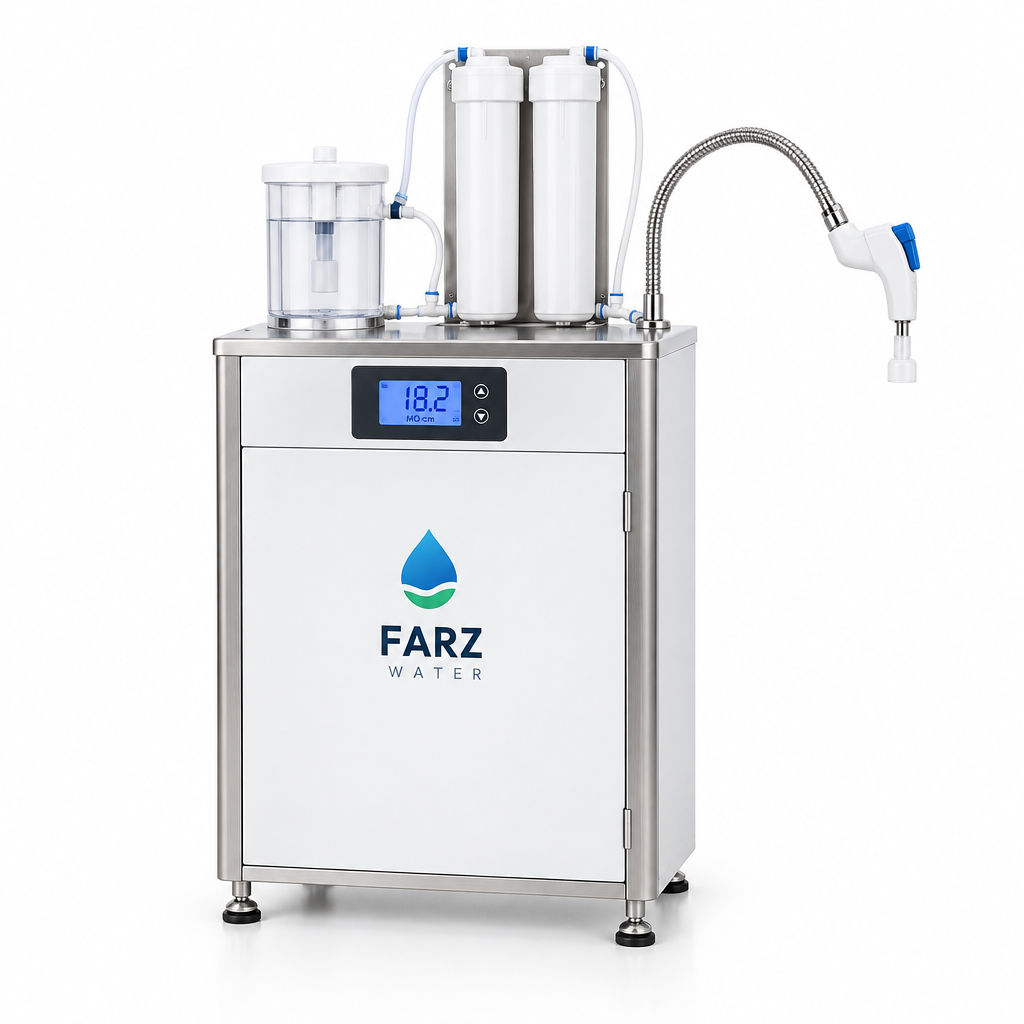
A Laboratory Water Purification System from FARZ Water produces Type III RO water and Type I ultrapure water at 18.2 megohm-cm for laboratories across Oman. It serves hospital and clinical labs, university and school science departments, quality control labs in food and pharmaceutical plants, environmental testing labs and calibration facilities.
Type I, Type II and Type III: What Your Lab Actually Needs
Most enquiries arrive asking for pure water with no grade attached, so it is worth setting out. Type III is RO water at roughly 0.05 to 1 megohm-cm, fine for glassware rinsing, autoclaves, water baths and feeding other equipment. Type II is RO plus deionisation above 1 megohm-cm, used for buffer and media preparation and general reagent work. Type I is ultrapure at 18.2 megohm-cm with organics and bacteria control, needed for HPLC, ICP-MS, molecular biology, cell culture and trace analysis. A laboratory water purification system built for Type I costs several times a Type III unit, so specifying one grade higher than the work requires is the most common way labs here overspend.
Key Features and Specifications
- Output: 5 to 100 litres per hour RO, with Type I dispensing on demand
- Type I quality: 18.2 megohm-cm at 25 degrees C, TOC below 10 ppb on units with UV oxidation
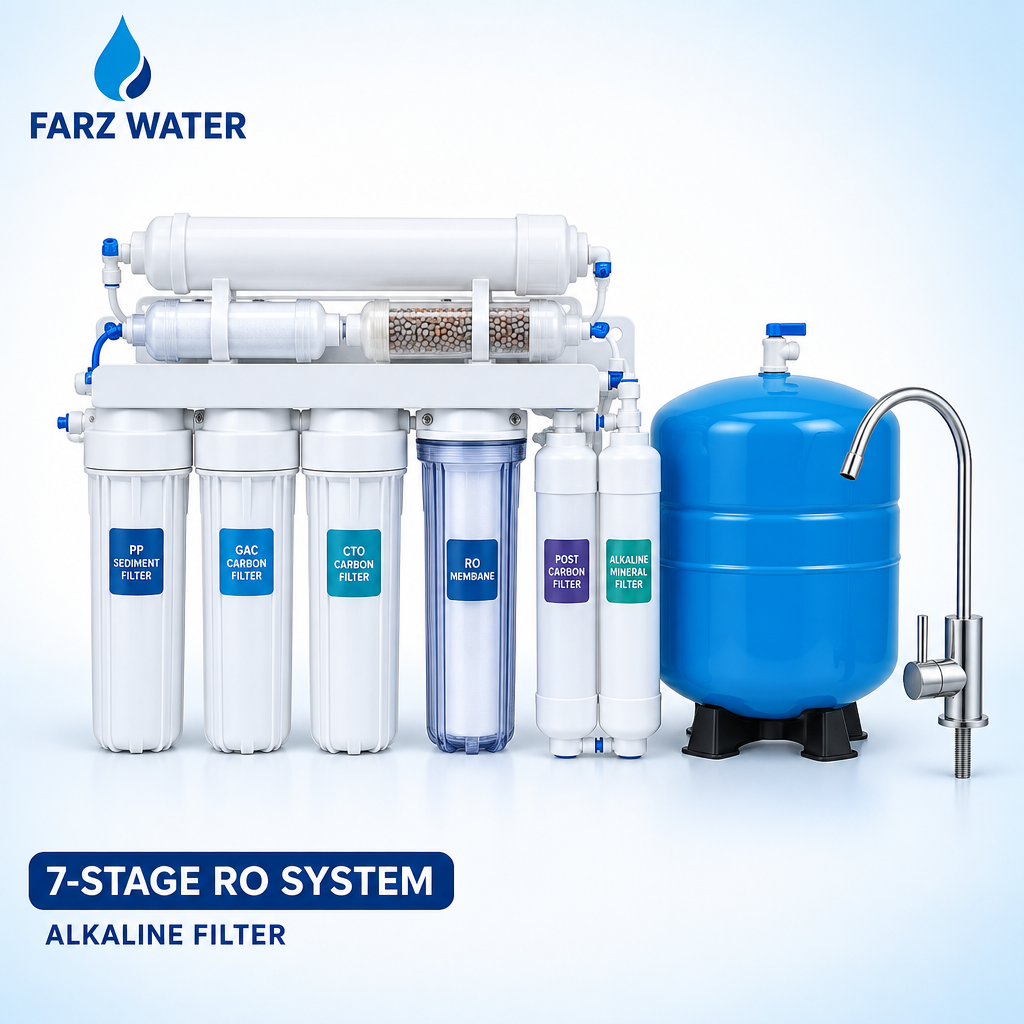
- RO stage with thin-film composite membrane and automatic flush
- Mixed-bed DI polishing cartridges with resistivity-triggered change indication
- 185 nm and 254 nm UV lamps for TOC reduction and bacterial control
- 0.22 micron final filter at the dispensing point, with optional ultrafilter for endotoxin-free water
- Inline resistivity and temperature monitoring with digital display
- Pre-treatment cartridge sized for Oman feed hardness, which is the difference between a two-year and a six-month membrane
- Integral or separate reservoir with vent filter and level display
- Dispensing gun on a flexible arm, plus fixed dispense point
- Benchtop, wall-mounted or under-bench configurations
Who Uses a Laboratory Water Purification System in Oman
Hospital and clinical labs use them for analyser feed water, where a biochemistry analyser will flag errors long before anyone suspects the water. Universities and colleges use them across teaching and research benches. Food, beverage and pharmaceutical QC labs use them for reagent preparation and equipment rinsing under their accreditation requirements. Environmental and water testing labs use them for blanks and standards, where any carryover shows up directly in the result. Calibration and electronics labs use them for final rinsing. We have supplied and maintain lab systems for hospital and institutional clients across Muscat.
Installation, Validation and Service
FARZ Water supplies, installs and commissions the unit, including feed water testing, cartridge and membrane loading, sanitisation and a handover record showing measured resistivity and flow at the dispense point. Where your accreditation requires it we provide IQ and OQ documentation. Consumables are the real ownership cost on lab systems, so we quote them openly at the start: pre-treatment cartridges, RO membrane, DI packs, UV lamps and the final filter, each with a realistic interval for Oman feed water rather than a European figure. Cartridges and lamps are stocked in Muscat. Annual maintenance contracts cover scheduled consumable changes, sanitisation and resistivity verification. Browse our full range of laboratory and industrial water treatment systems for supporting equipment.
Frequently Asked Questions
How pure is 18.2 megohm-cm really?
It is the theoretical maximum resistivity of water at 25 degrees C. Resistivity alone does not cover organics or bacteria, which is why Type I units add UV oxidation and a final filter. For trace organic work, ask about TOC, not just resistivity.
Can it run on municipal water directly?
Yes, with pre-treatment matched to the feed. Muscat supply hardness will scale an unprotected RO membrane quickly, so the pre-treatment cartridge is not an accessory.
What are the annual running costs?
For a typical 10 to 20 LPH Type I unit, consumables run roughly 200 to 400 OMR a year depending on usage and feed quality. We give the figure in the quotation rather than after installation.
How long do DI packs last?
Six months to two years depending on throughput and RO performance. A failing RO membrane exhausts DI packs fast, which is why the resistivity trend is worth logging.
Laboratory water grades referenced here follow ISO 3696 and ASTM D1193. Send your required grade, daily volume and feed water source to FARZ Water in Muscat for a specified proposal. For general water quality context see the WHO guidelines for drinking-water quality.
How We Specify a Laboratory Water Purification System
Three questions settle it: which grade the work actually needs, how many litres a day at peak, and what the feed water is. Grade sets the treatment train, volume sets the RO stage and reservoir, feed quality sets the pre-treatment and the consumable intervals. A laboratory water purification system specified without a feed test will hit its resistivity spec on day one and drift within months. We test your feed before quoting.

Reviews
There are no reviews yet.