
Description
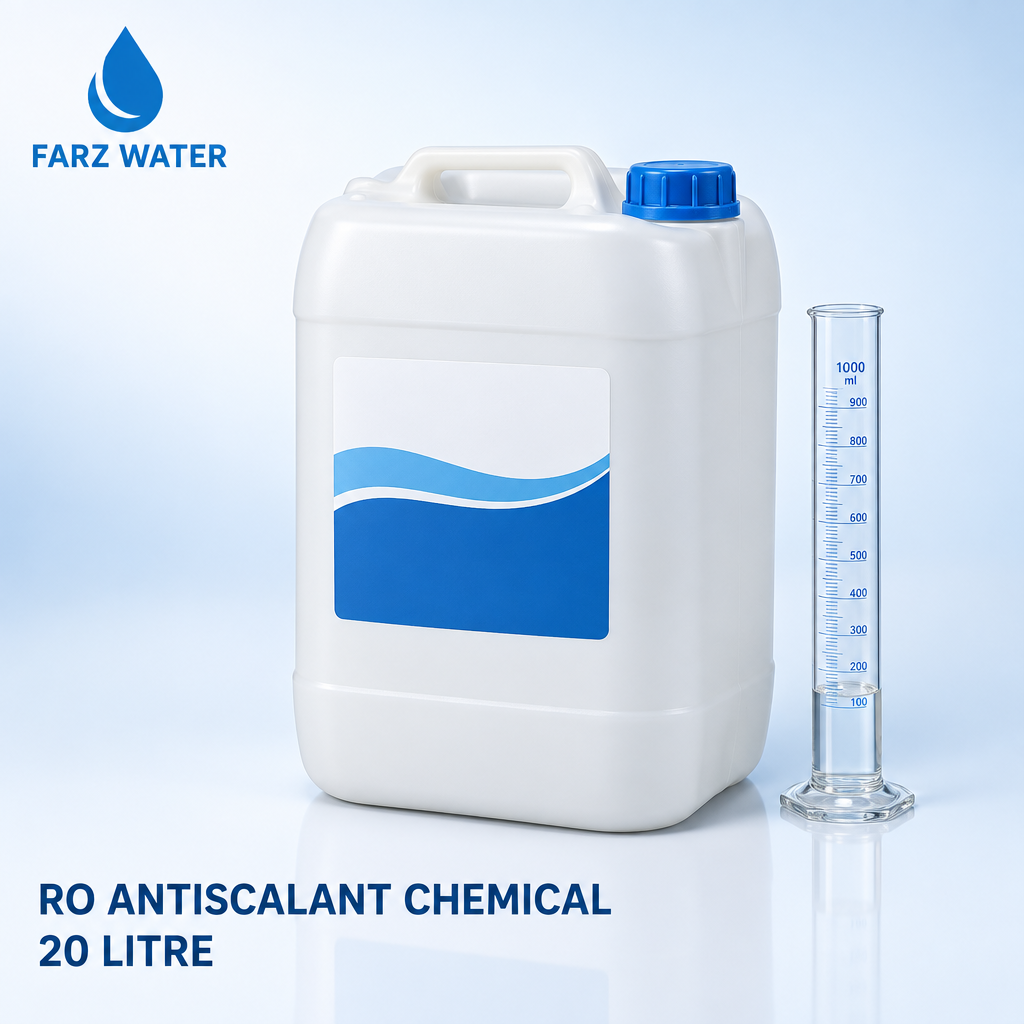
Antiscalant chemical Oman — a 20 litre drum of RO scale inhibitor for commercial and industrial reverse osmosis plants. Dosed at a few parts per million into the feed, it is what stops calcium, silica and barium precipitating onto the membrane surface as the plant concentrates them.
What antiscalant chemical Oman plants need actually does
It does not remove hardness. It works at threshold level, far below the concentration that would be needed to sequester the scaling ions, by interfering with crystal formation. Scale-forming minerals are held in supersaturated solution long enough to leave with the reject stream instead of depositing on the membrane during the seconds the water is in the vessel.
That is why dosing accuracy matters more than dosing volume. Typical dose is 3 to 5 ppm in the feed. Doubling it wastes chemical and can foul the membrane itself; halving it does nothing at all.
Choosing the right formulation
Antiscalant is not one product. The chemistry is selected against what your water is going to precipitate:
- Calcium carbonate and sulphate scaling, the most common case, handled by general-purpose phosphonate blends
- Silica, which needs a specific silica-dispersant formulation and is the one most often missed on Omani groundwater
- Barium and strontium sulphate, which scale at very low concentrations and need a targeted product
- Iron and manganese fouling, which needs a dispersant blend, though the real answer is an iron removal filter ahead of the plant
We select the product from a scaling projection run on your water analysis at your intended recovery, not from what is on the shelf. The saturation limits that projection works to are published in the DuPont Water Solutions technical literature.
Specification
- 20 litre HDPE drum, also available in 200 litre drums for plant duty
- Liquid concentrate, NSF-certified formulations available for potable duty
- Typical dose 3 to 5 ppm, confirmed by projection
- Effective across pH 5 to 10
- Shelf life around 12 months in a cool, shaded store
- Compatible with polyamide thin film composite membranes
Storage in Omani conditions
Heat shortens shelf life and some formulations will separate or precipitate in a drum left in an uncovered yard through summer. Store in shade, keep the cap sealed, and do not decant into an unlabelled container. A drum that has been standing since last year should be checked before use rather than assumed good.
Never store antiscalant in the same bund as acid or hypochlorite. Mixing incompatible chemicals in a dosing area is the most serious safety risk on a small water treatment plant.
Consumption and ordering
Consumption is modest and predictable once the dose is set. A 250 LPH plant running eight hours a day uses a 20 litre drum over several months; a 4000 LPH industrial plant gets through considerably more. Once we have commissioned your plant and recorded the millilitres per hour, we can put you on a standing delivery so the drum arrives before the tank runs dry.
Related equipment
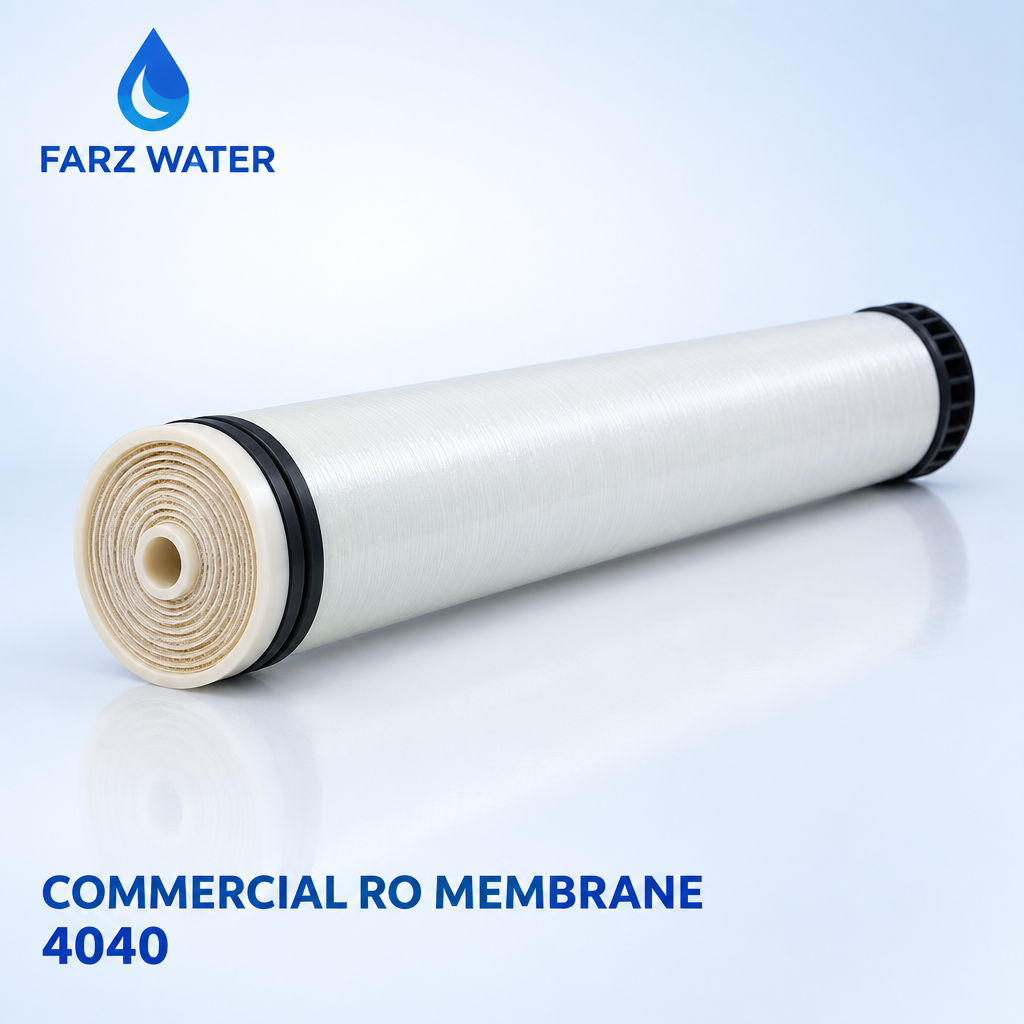
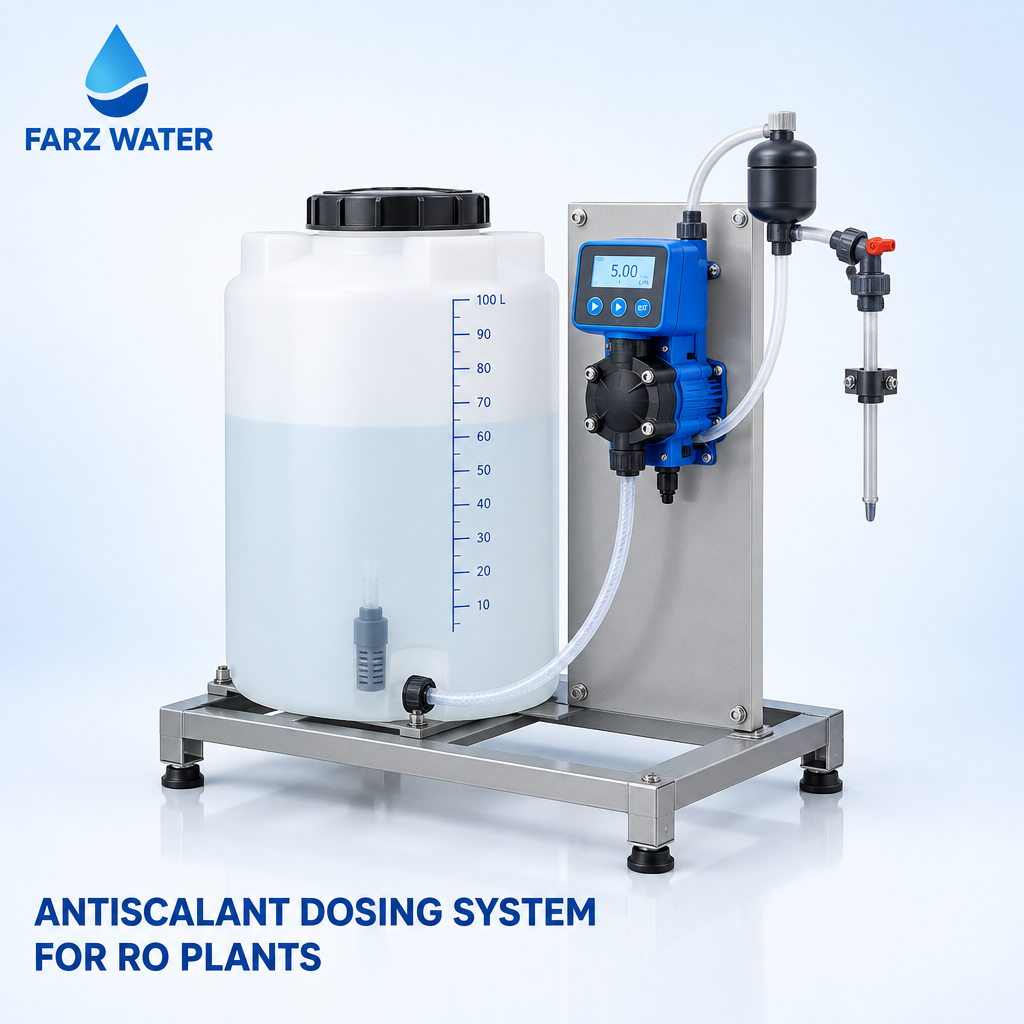
The chemical needs a dosing system to deliver it accurately: see the antiscalant dosing system with an Emec metering pump and injection assembly. Where hardness is very high, a commercial water softener upstream reduces the load the chemical has to carry, and protects the 4040 membranes further.
Request a quotation
Send your water analysis and plant recovery and we will confirm the correct formulation and dose, then quote per drum or on a standing order. Call +968 9455 4533 or request a quote.
Reviews
There are no reviews yet.