Description
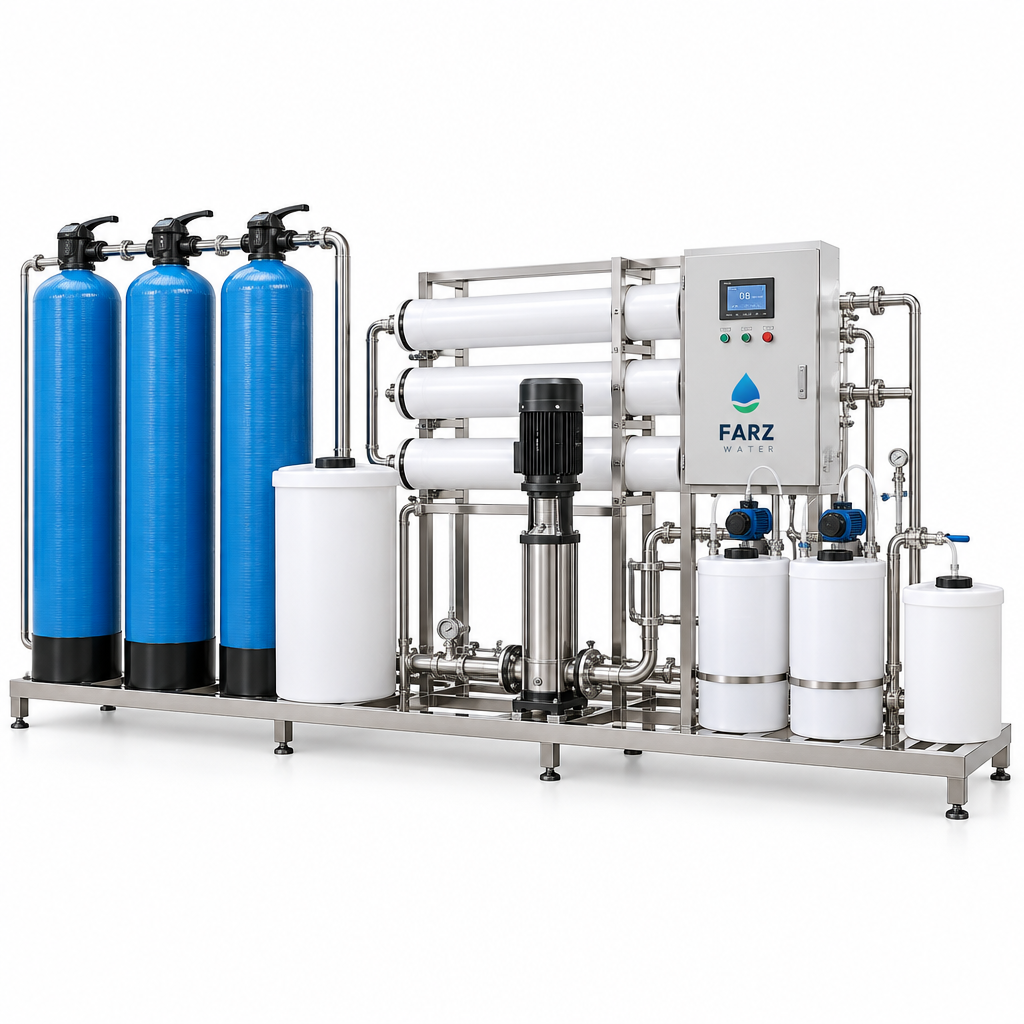
A Brackish Water RO Plant is the right answer when your source is a borehole or well running between roughly 1,000 and 10,000 ppm TDS. That is most of inland and coastal Oman outside the municipal network. FARZ Water designs, supplies and commissions brackish plants from 500 to 20,000 litres per hour for farms, factories, labour camps, villas and community supply schemes across the Sultanate.
What Makes a Brackish Water RO Plant Different
Brackish feed sits between municipal water and seawater, and it needs its own design. The membranes are brackish-water elements running at 10 to 16 bar, not the 55 to 70 bar of a seawater plant, so the pump and vessel ratings are lower and the energy cost per cubic metre is a fraction of desalination. What brackish sources bring instead is scaling and fouling: high calcium, sulphate, silica, iron and manganese. Get the pre-treatment and antiscalant wrong and the membranes foul within months. That is why every brackish water RO plant we build starts from a full source analysis rather than a standard drawing.
Key Features and Specifications
- Capacity: 500 to 20,000 LPH, configured to your demand and feed quality
- Feed range: 1,000 to 10,000 ppm TDS
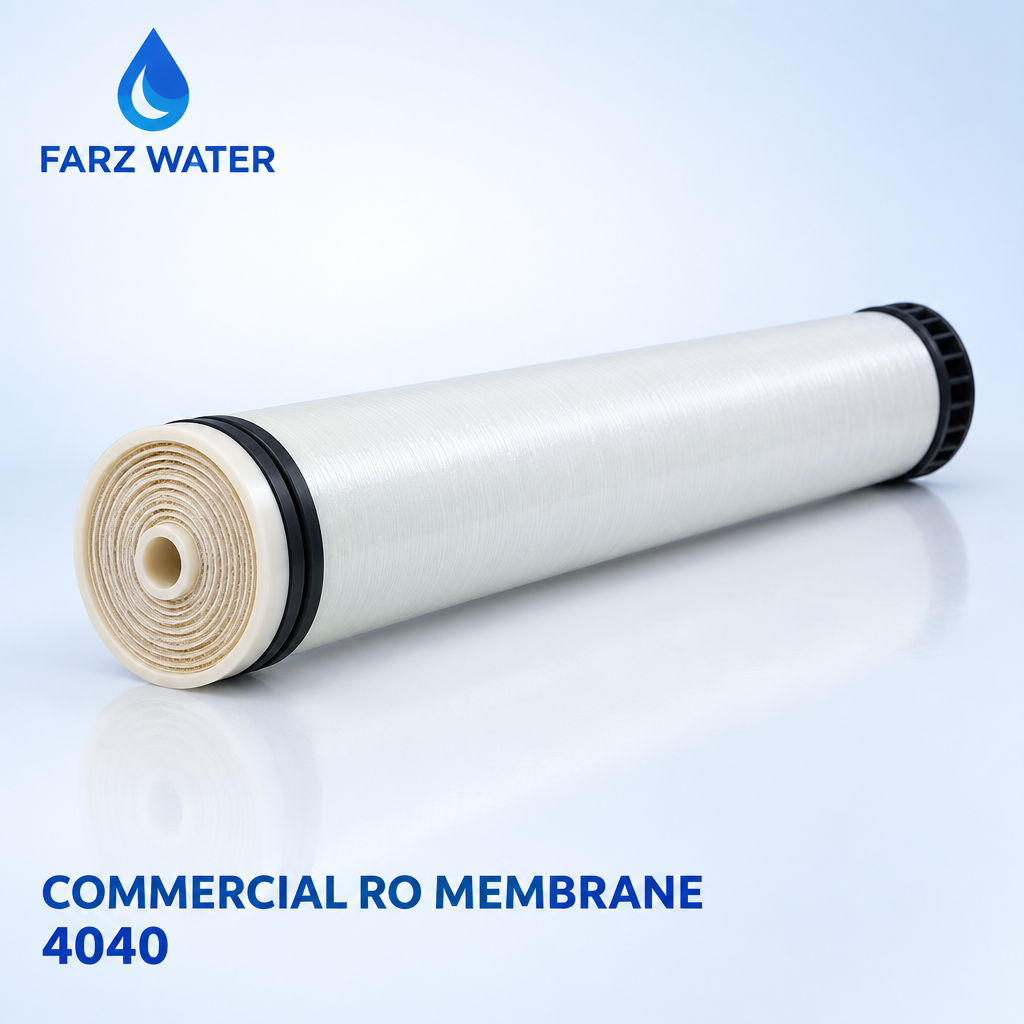
- Membranes: DuPont Filmtec brackish water elements, 4040 or 8040, in FRP pressure vessels
- Pre-treatment: multimedia filter, activated carbon filter, and iron or manganese removal media where the borehole needs it
- Softener ahead of the membranes on high-hardness sources
- Cartridge filtration at 5 and 1 micron
- Stainless multistage high-pressure pump, with VFD on larger units
- Antiscalant and pH dosing with calibrated tanks
- CIP cleaning skid on plants above 5,000 LPH
- Instrumentation: conductivity transmitter, permeate and reject flow meters, stage pressure gauges
- Control panel with auto flush, dry-run and high-pressure protection
- Recovery: 55 to 75 percent depending on feed chemistry
Who Uses a Brackish Water RO Plant in Oman
Farms in Barka, Suwaiq and the Batinah run them to bring borehole water down to a level crops and livestock tolerate, and to supply the farmhouse. Factories and workshops on unconnected plots use them as the only viable process water source. Labour accommodations and villas outside the municipal network use them for drinking and domestic supply. Fish farms and greenhouses use them where the salinity window is narrow. Community schemes in outlying wilayats use them as the village supply. The right capacity comes from daily demand and feed TDS together, because higher salinity means lower recovery and a larger plant for the same output.
Installation, Service and Warranty
FARZ Water handles the source analysis, design, supply, installation and commissioning anywhere in Oman. Commissioning includes media loading and backwash, membrane loading and flush, dosing calibration, and a witnessed performance test with permeate flow and conductivity recorded on the handover certificate. Operators are trained on site and receive an operation manual. One-year warranty on pump, panel and skid; membranes and media follow manufacturer terms. Membranes, cartridges, media and antiscalant are stocked in Muscat. Annual maintenance contracts cover cartridge changes, membrane cleaning, media top-up and quarterly water testing. See our full range of commercial and industrial RO plants for pre-treatment, dosing and UV equipment that pairs with this system.
Frequently Asked Questions
How do I know if my water is brackish?
Test it. Between 1,000 and 10,000 ppm TDS is brackish and this plant suits it. Above that you are into seawater territory and need a different membrane and pump rating. We test samples free within Muscat.
What is the running cost compared with desalination?
Far lower. Brackish operation at 10 to 16 bar typically uses a third to a quarter of the energy per cubic metre of a seawater plant, plus antiscalant and periodic cleaning.
Will it remove iron and hardness?
The membranes will, but iron and manganese must be taken out in pre-treatment or they foul the elements. Where the borehole carries them we add Birm or greensand filtration ahead of the plant.
What happens to the reject water?
At 55 to 75 percent recovery there is a concentrated reject stream. On farms it usually goes to a salt-tolerant crop area or an evaporation pond. We plan the disposal route as part of the design, not afterwards.
Product water is designed against Oman Standard OS 8 and the WHO guidelines for drinking-water quality. Send your borehole analysis and daily demand to FARZ Water in Muscat for a sized proposal and quotation.
How We Size a Brackish Water RO Plant
Sizing comes from three numbers together: daily demand, running hours and the borehole analysis. Feed TDS sets the achievable recovery, which sets how much raw water the plant must draw for a given output, which sets the pump duty and vessel count. We add 15 to 20 percent headroom and design the reject disposal route at the same time. A brackish water RO plant sized off demand alone, without the analysis, is the most common reason these plants underperform in their first year.

Reviews
There are no reviews yet.