Description
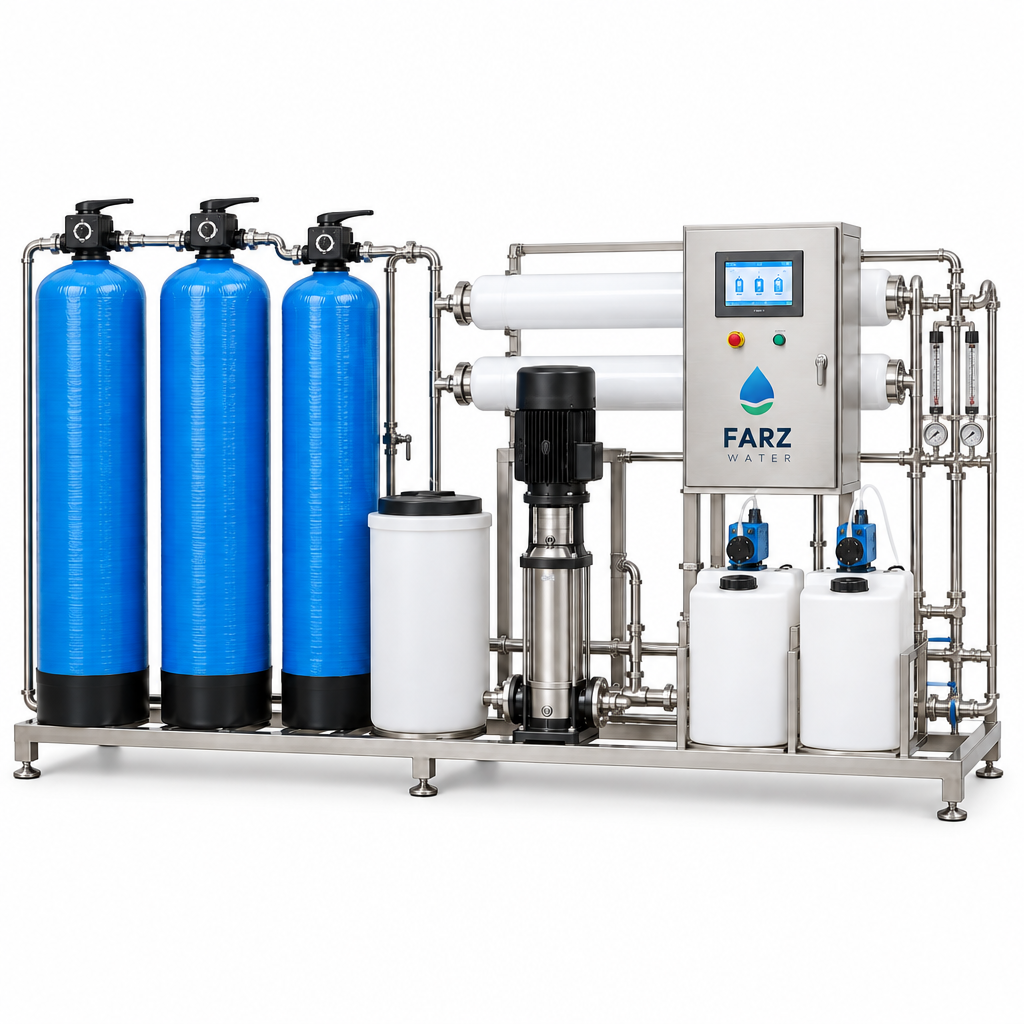
The Industrial Water Treatment Plant from FARZ Water is a compact pure-water system for small and mid-size production sites in Oman. It combines multimedia pre-treatment, softening, reverse osmosis and polishing in one skid, delivering process water at a consistent quality for food and beverage lines, pharmaceutical preparation, electronics rinsing, boiler feed and laboratory supply.
What This Industrial Water Treatment Plant Does
Raw water in Oman arrives with high hardness, chloride and silica, and often with iron from borehole sources. Feeding that water straight into a boiler, a bottling line or a CIP system causes scale, corrosion and product rejection. This plant handles the full chain in sequence: sand and turbidity removal, hardness exchange, antiscalant dosing, membrane desalination, then optional mixed-bed polishing and UV disinfection. The result is process water of a known, repeatable specification rather than whatever the tanker delivered that week.
Key Features and Specifications
- Capacity: 500 to 3,000 LPH, sized to your process demand
- Pre-treatment: multimedia filter and activated carbon filter in FRP vessels with multiport valves
- Softener with automatic time or volume-based regeneration
- Micron cartridge filtration at 5 and 1 micron before the membranes
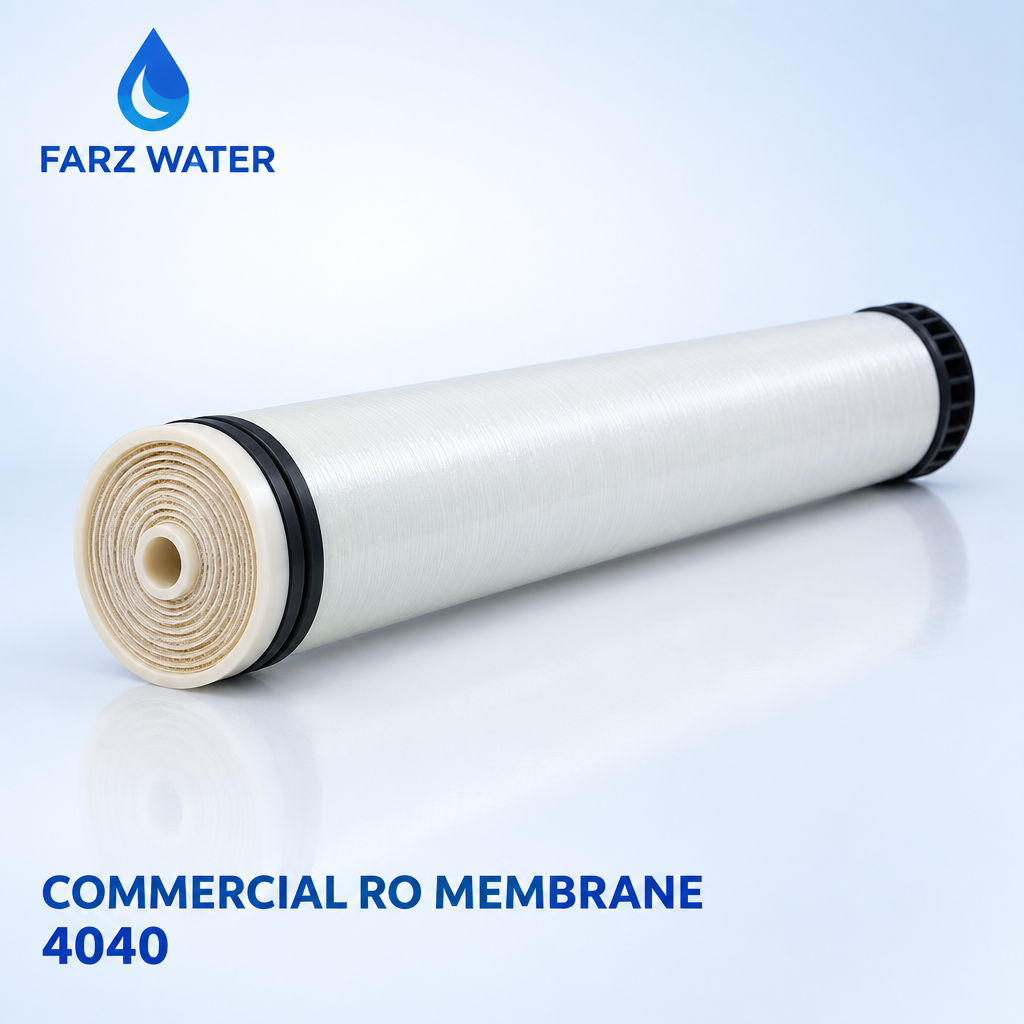
- DuPont Filmtec 4040 or 8040 membranes in FRP pressure vessels
- Grundfos multistage high-pressure pump
- Emec antiscalant and pH dosing with calibrated chemical tanks
- Optional mixed-bed DI polishing to below 1 microsiemens per cm
- Control panel with PLC or relay logic, TDS and conductivity monitoring, dry-run and pressure protection
- SS 304 or epoxy-coated skid, pre-piped and factory tested
Where an Industrial Water Treatment Plant Is Used
Food and beverage plants use it for product water, CIP rinse and steam generation. Pharmaceutical and cosmetics units use the RO plus DI train ahead of a purified water loop. Electronics and metal finishing workshops use the polished output for final rinse where spotting matters. Hotels and hospitals use it for boiler make-up and laundry, where scale drives fuel cost. Bottling and ice plants use it as the primary treatment before filling. Each of these has a different specification, so the plant is configured from your water analysis, target output quality and hours of operation.
Installation, Service and Warranty
FARZ Water designs, supplies, installs and commissions the plant across the Sultanate. Commissioning covers feed analysis, media loading and backwash, resin charging, dosing calibration and a performance test with results recorded on the handover certificate. Operators receive on-site training and a printed operation manual. The plant carries a one-year warranty on pumps, valves and the control panel, with membranes and media covered by manufacturer terms. Spares are held in Muscat. Annual maintenance contracts cover scheduled media changes, membrane cleaning, resin top-up and quarterly water testing. Browse our complete range of industrial water treatment equipment for pre-treatment filters, softeners, dosing systems and UV sterilizers.
Frequently Asked Questions
What output water quality can I expect?
Single-pass RO typically gives 20 to 60 ppm TDS from 1,500 ppm feed. Adding mixed-bed DI polishing brings it below 1 ppm for laboratory and pharmaceutical use.
Do I need a water analysis before ordering?
Yes. Sizing without one risks undersized pre-treatment and early membrane fouling. We collect and test a sample from your site at no cost within Muscat.
What is the footprint?
A 1,000 LPH skid occupies roughly 2.5 by 1.2 metres with a working height of 2 metres, plus space for the storage tank and a service aisle.
What are the running costs?
Power, antiscalant, salt for the softener and periodic cartridge and membrane replacement. For a 1,000 LPH plant running eight hours a day, consumables typically run 25 to 45 OMR per month.
Process water specifications follow Oman Standard OS 8 and, where applicable, the WHO guidelines for drinking-water quality. Send your water analysis and daily demand to FARZ Water in Muscat for a sized proposal.
How We Size an Industrial Water Treatment Plant
Sizing starts with three numbers: your daily water demand, your hours of operation, and the feed water analysis. From those we set the membrane count, pre-treatment vessel diameter, pump duty and storage volume, then add 15 to 20 percent headroom so the plant is not running flat out. An undersized industrial water treatment plant fouls early and costs more in membranes than the money saved on the purchase. Send us your figures and we will show the calculation, not just a price.

Reviews
There are no reviews yet.