
Description
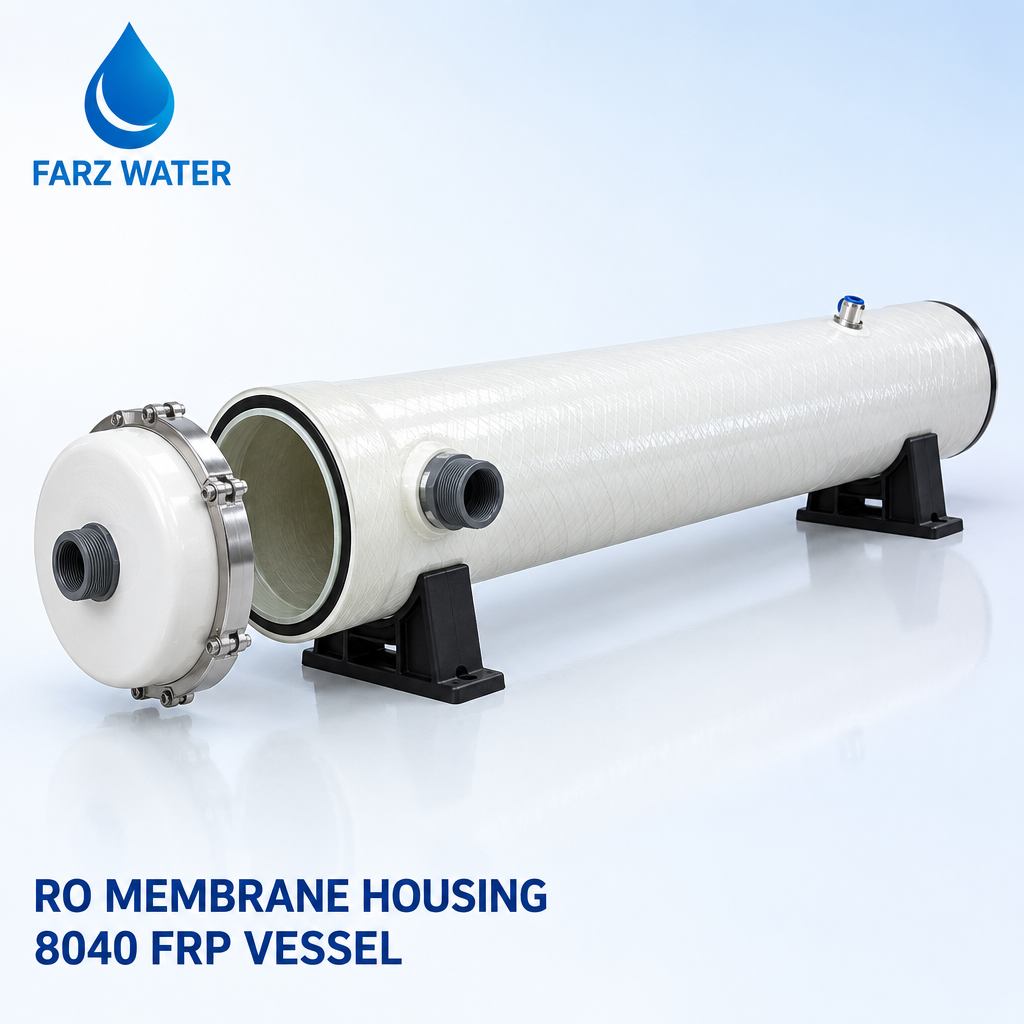
RO membrane housing Oman — an 8040 FRP pressure vessel that holds the membrane elements in a commercial or industrial reverse osmosis plant. It is the component nobody thinks about until it leaks, and the one where cutting cost is least sensible, because it is the part holding 20 bar next to your plant room wall.
Pressure rating is the specification that matters
Vessels are supplied in standard ratings, typically 300 psi, 450 psi, 600 psi, 1000 psi and above. The rating must exceed the maximum pressure the plant can reach, not the pressure it normally runs at.
Normal operating pressure on brackish water is 10 to 15 bar. A high-pressure switch failure, or a valve closed against a running pump, can spike far beyond that in seconds. A 300 psi vessel on a plant capable of 20 bar is a vessel waiting for one bad afternoon, and FRP does not fail gracefully. Vessel ratings and the element dimensions they are built around are set out in the DuPont Water Solutions technical literature.
Side port or end port
An RO membrane housing Oman plants use comes in two arrangements. End-port vessels take feed and concentrate through the end caps and suit single-vessel systems with simple pipework. Side-port vessels take feed and concentrate through ports in the shell wall and allow vessels to be stacked and manifolded cleanly in multi-vessel arrays.
For anything beyond two vessels, side port is the sensible choice. Retrofitting a manifold onto end-port vessels is possible and always looks it.
Specification
- 8 inch nominal diameter, filament wound fibreglass reinforced plastic
- Lengths for 1 to 7 elements in series
- Standard pressure ratings from 300 psi to 1000 psi
- Side port or end port configuration
- Victaulic, NPT or flanged port connections
- Retaining ring or head-and-seal end closure
- Corrosion-resistant internal liner, UV-resistant external coating
- Mounting saddles and clamps supplied
Where an RO membrane housing Oman plants run actually fails
Almost never through the shell. Vessels fail at the end closure, and almost always because of how they were serviced rather than how they were made.
The retaining ring must be fully seated in its groove before the plant is pressurised. A partially seated ring holds at low pressure, gives no warning, and releases the head under load. This is the one genuinely dangerous job on a small RO plant, and it is why the vessel should be depressurised and confirmed at zero before any head is touched.
The second failure is the O-ring: reused when it should have been replaced, or lubricated with an oil that attacks it. Use glycerine or a silicone lubricant rated for the seal material, and replace the O-ring at every element change rather than inspecting it hopefully.
RO membrane housing Oman: UV and heat
FRP degrades in sunlight. A vessel installed outdoors in Oman without shade will chalk, then craze, then lose strength over a few summers. Plants installed on rooftops or in open yards need a shade structure, and this is not optional here in the way it might be in a milder climate.
Matching elements and smaller sizes
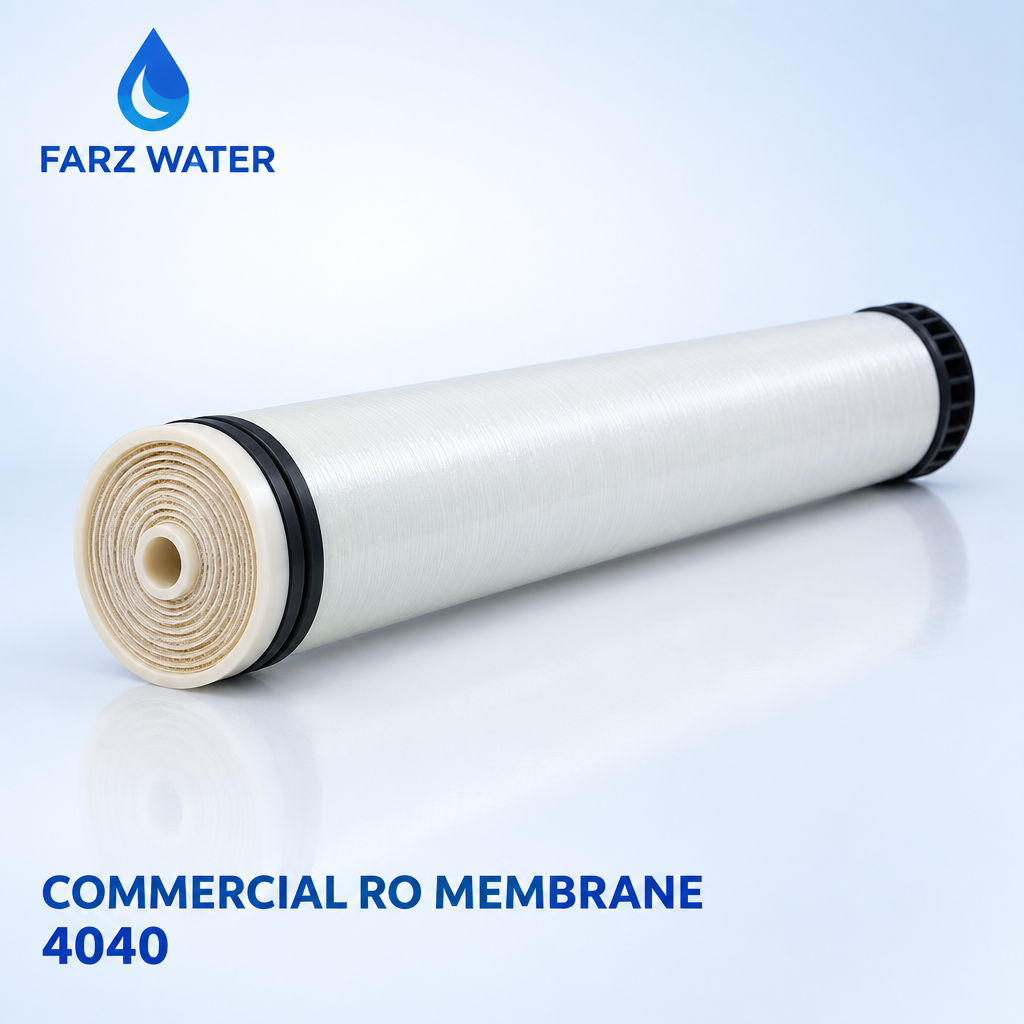
The vessel must match the element: an 8040 vessel takes 8040 elements. For smaller commercial plants the 4040 vessel takes the 4040 RO membrane. Complete plants using these vessels include the 4000 LPH industrial RO plant.
Request a quotation
Tell us element size, number of elements per vessel, your maximum operating pressure and whether you need side or end port, and we will quote the correct vessel with saddles and seals. Call +968 9455 4533 or request a quote.


Reviews
There are no reviews yet.