
Description
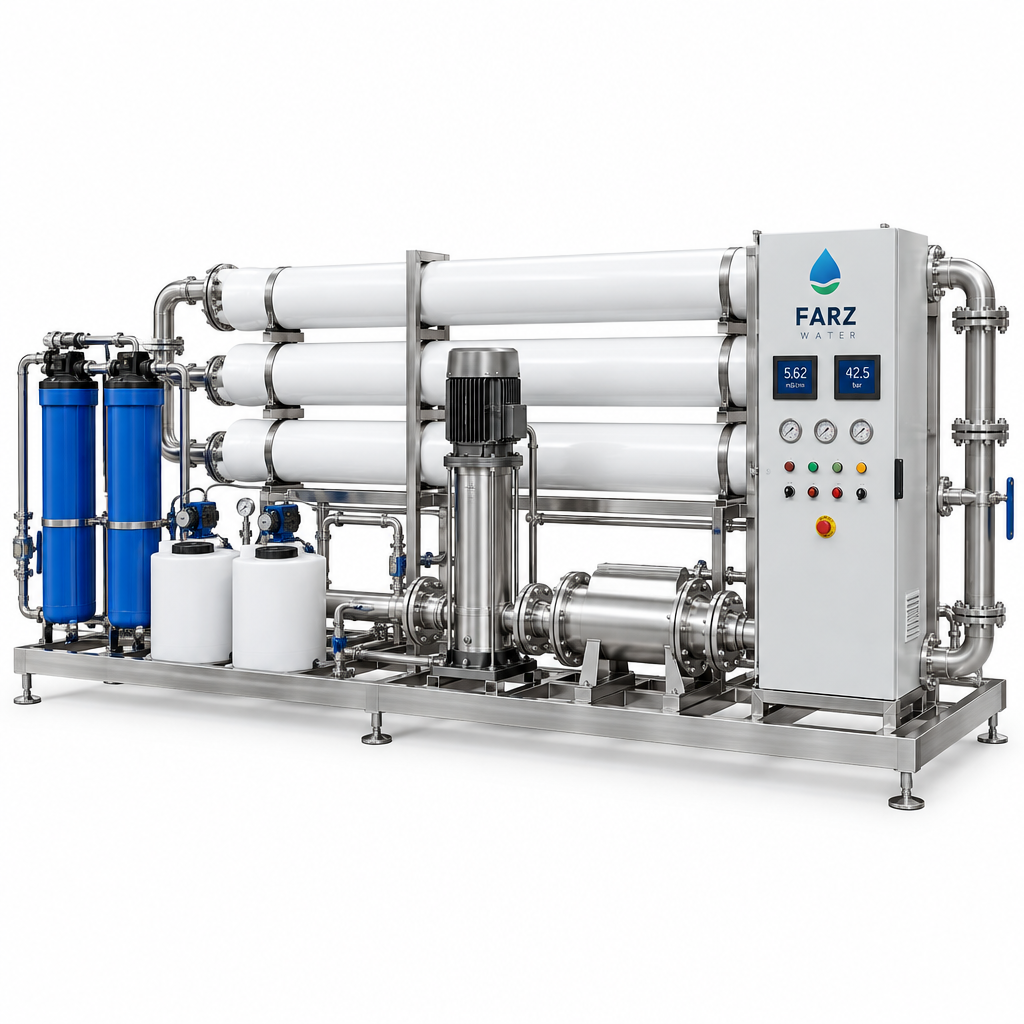
A Seawater Desalination Plant turns Gulf of Oman seawater at roughly 38,000 to 42,000 ppm TDS into drinking water below 500 ppm. FARZ Water supplies and commissions SWRO units from 1,000 to 100,000 litres per day for coastal resorts, fish farms, offshore and remote camps, island facilities and villas beyond the municipal network.
Why a Seawater Desalination Plant Is a Different Machine
People often ask why an SWRO unit costs several times a brackish plant of the same output. Osmotic pressure is the answer. Gulf seawater needs 55 to 70 bar at the membrane to push fresh water through, against 10 to 16 bar for brackish. That drives everything: SS 316 or duplex wetted parts instead of SS 304, high-pressure vessels and fittings rated to 1,000 psi, a heavy-duty plunger or multistage pump, and recovery limited to 35 to 45 percent rather than 60 to 75. It also drives the single most important number in the quotation, which is energy per cubic metre.
Key Features and Specifications
- Capacity: 1,000 to 100,000 litres per day, configured to demand
- Feed: seawater up to 45,000 ppm TDS
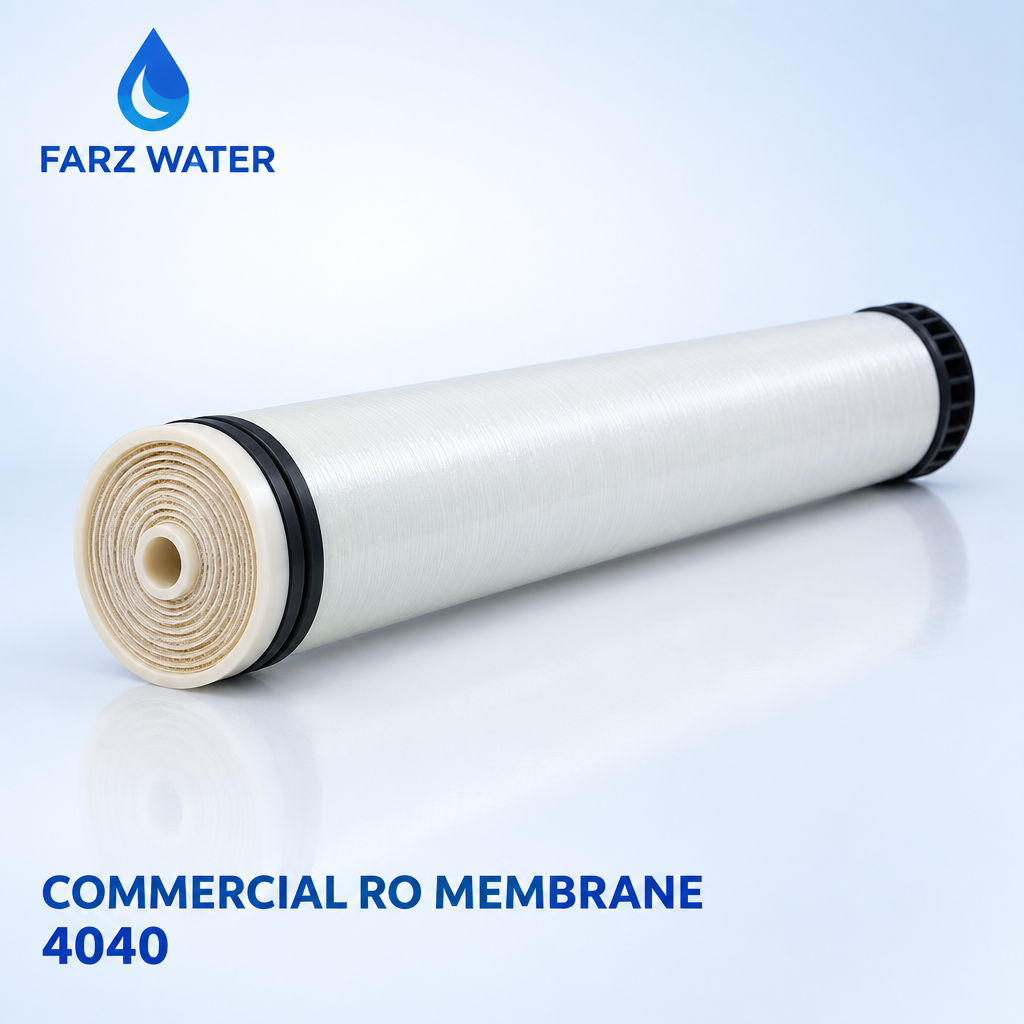
- Membranes: DuPont Filmtec SW30 seawater elements, 4040 or 8040
- Pressure vessels rated to 1,000 psi, FRP or stainless
- High-pressure pump in SS 316 or duplex, with energy recovery device on larger units
- Pre-treatment: multimedia filter, activated carbon, 20 and 5 micron cartridges, with DMF or UF ahead of it on turbid intakes
- Dosing: antiscalant, sodium metabisulphite for dechlorination, and pH correction
- Post-treatment: remineralisation cartridge and UV sterilizer for potable duty
- Instrumentation: conductivity transmitter, permeate and reject flow meters, high and low pressure protection
- All wetted parts in marine-grade stainless, epoxy-coated or SS 316 frame
- Recovery: 35 to 45 percent; energy 3 to 5 kWh per cubic metre with recovery fitted
Where a Seawater Desalination Plant Is Used in Oman
Coastal resorts and dive camps along the Musandam, Sur and Salalah coasts use them where no municipal line reaches. Fish and shrimp farms use them for hatchery freshwater. Offshore platforms, vessels and remote construction camps use containerised versions. Villas and farms on the shoreline use small units where the borehole has gone saline from seawater intrusion, which is an increasingly common reason clients call us. Before quoting an SWRO unit we always check whether the source is truly seawater or a saline borehole under 10,000 ppm, because the second case is a brackish plant at a fraction of the cost.
Intake, Installation and Service
The intake is half the project. A beach well or sand-point intake gives pre-filtered, stable-quality feed and is almost always worth the civil cost against an open surface intake that swings with tide, algae and turbidity. FARZ Water surveys the site, designs the intake and pre-treatment together with the plant, then supplies, installs and commissions. Commissioning includes a full seawater analysis, membrane loading and flush, dosing calibration and a witnessed performance test with permeate flow and TDS on the handover certificate. One-year warranty on pump, panel and skid; membranes under manufacturer terms. Spares and chemicals are stocked in Muscat. See our full range of commercial and industrial RO plants for pre-treatment, dosing and UV equipment.
Frequently Asked Questions
What is the output water quality?
Typically 200 to 400 ppm TDS from 40,000 ppm feed at 99.4 percent or better rejection. A second pass brings it lower where process duty requires it.
What does it cost to run?
Energy dominates. Expect 3 to 5 kWh per cubic metre on a plant with energy recovery, 6 to 8 without. Chemicals, cartridges and membrane replacement sit on top of that.
How long do seawater membranes last?
Three to five years with a good intake and disciplined pre-treatment. On an open intake without adequate filtration, closer to eighteen months.
Can it run on solar?
Smaller units can, with adequate battery buffering or by running only in daylight hours into a storage tank. We size the array and the tank together rather than treating them separately.
Product water is designed against Oman Standard OS 8 and the WHO guidelines for drinking-water quality. Send your intake location, seawater analysis and daily demand to FARZ Water in Muscat for a sized proposal.
How We Size a Seawater Desalination Plant
Four inputs decide it: daily demand, the seawater analysis, the intake type and your power source. Salinity and temperature set the pressure and therefore the pump and energy figure; the intake sets how much pre-treatment is needed; the power source decides whether energy recovery pays for itself. A seawater desalination plant quoted without an intake survey is a quotation for the easy half of the job. We survey first, then price the whole thing.

Reviews
There are no reviews yet.