
Description
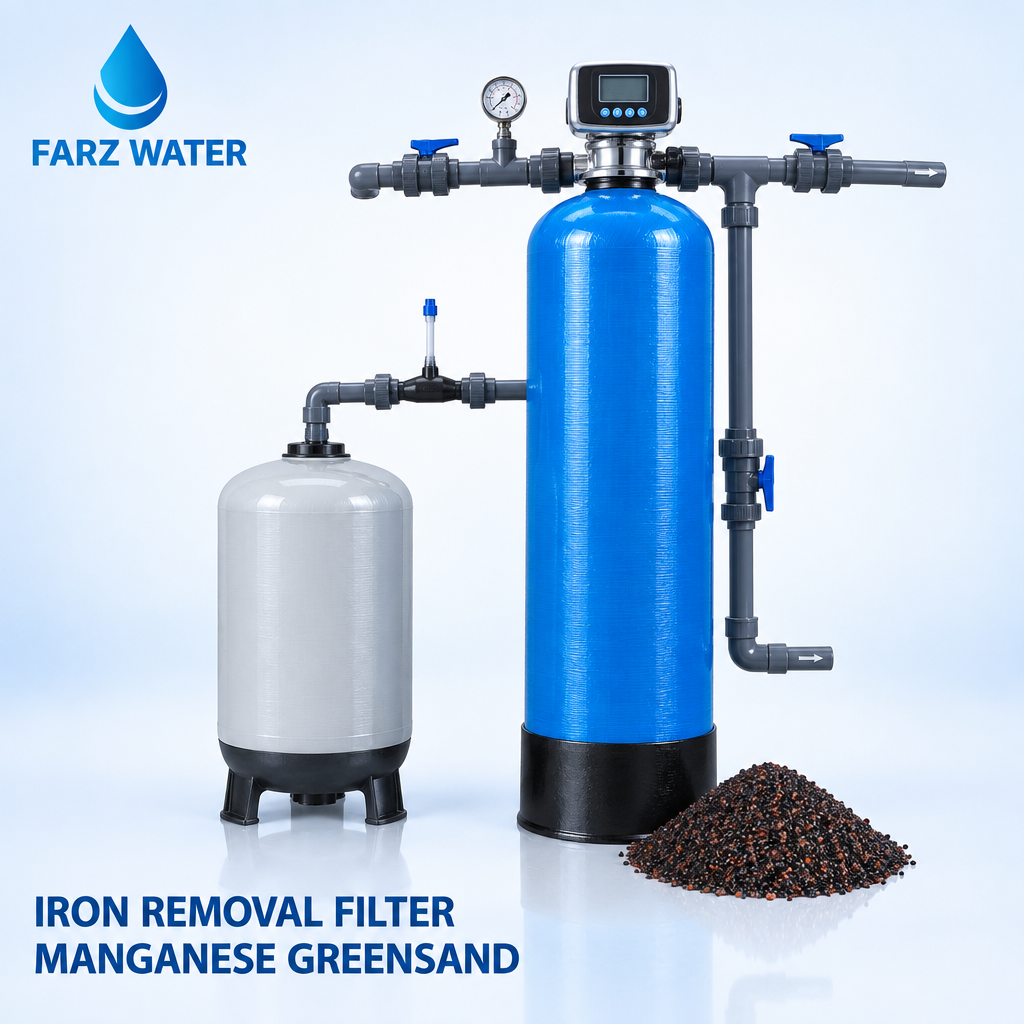
Iron removal filter Oman — a manganese greensand or catalytic media filter that oxidises dissolved iron and manganese and traps them in the bed. It is the answer to the orange staining, metallic taste and blocked cartridges that come with borewell supply across the interior and in parts of Muscat.
Iron removal filter Oman: how to know iron is your problem
Dissolved iron is invisible at the tap. Water comes out clear, then turns orange in the bucket or the toilet cistern within minutes as it meets air. That delay is the signature. If your water is already orange at the tap, the iron is in particulate form and behaves differently.
Other signs are reddish-brown staining on sanitary ware and laundry, a metallic taste, and cartridge filters that turn rust-coloured and block within weeks. Manganese shows as black or dark grey staining instead, and is more stubborn.
The 0.3 ppm iron and 0.1 ppm manganese thresholds where staining and taste begin are set out in the WHO drinking water guidelines. Below 0.3 ppm iron, most people notice nothing. Above 1 ppm the staining is unmistakable, and above 3 ppm no domestic filter will cope without proper oxidation.
How the iron removal filter Oman borewells need works
Iron in groundwater is dissolved ferrous iron. It is soluble, so a filter cannot catch it directly. The filter must first oxidise it to ferric iron, which is a solid, then trap that solid in the bed.
Manganese greensand carries a catalytic coating that drives this oxidation on contact. Air injection ahead of the vessel raises dissolved oxygen and does most of the work; where iron is high or manganese is present, a small chlorine or permanganate dose ahead of the filter completes it.
The oxidised particles are held in the bed and flushed out on backwash. Regeneration with potassium permanganate restores the media’s oxidising capacity on greensand types, while catalytic media regenerate on aeration alone.
Iron removal filter Oman performance depends on oxidation
Most failed iron removal filter Oman installations are failures of oxidation, not of media. Insufficient contact time between the air injector and the vessel means iron arrives still dissolved, passes straight through, and oxidises afterwards in the customer’s kettle.
That is why we size a retention or aeration tank ahead of the filter rather than relying on a venturi and hope. It adds cost at installation and removes the call-back at month three.
Specification
- FRP pressure vessel, 1054 to 1665 depending on flow
- Manganese greensand or catalytic oxidation media with support gravel
- Automatic backwash control valve, metered or time-clock
- Venturi air injector or aeration tank with air release
- Optional permanganate regeneration tank for greensand
- Iron removal to below 0.3 ppm, manganese to below 0.05 ppm on correctly sized systems
Limits worth knowing
Iron bacteria produce a slimy reddish growth that no filter alone will clear; that needs shock chlorination of the well and lines first. Water with hydrogen sulphide, the rotten egg smell, needs a different media selection. And an iron filter does not soften water or reduce TDS, so on hard borewell supply it sits ahead of a water softener, never instead of one.
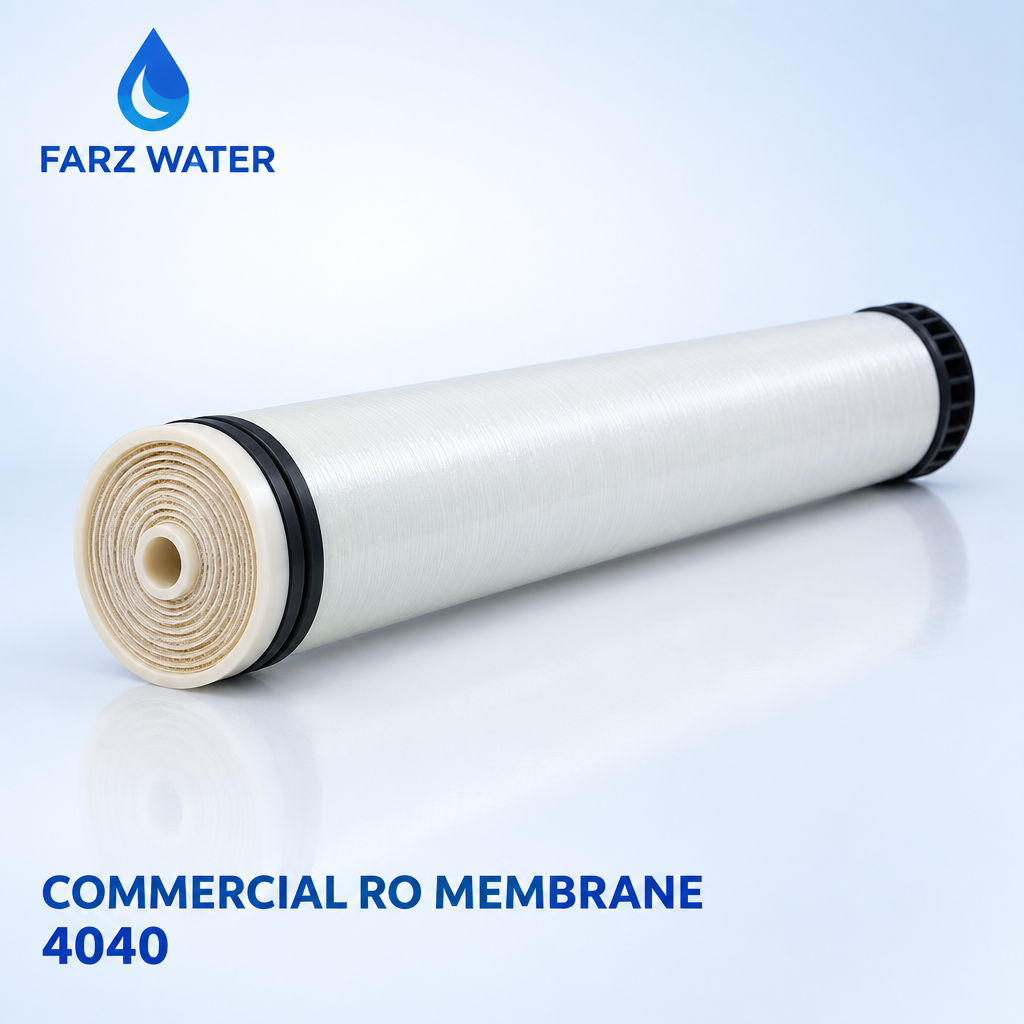
Iron is also brutal on RO membranes. Where a borewell feeds an RO plant, iron removal goes in front of the sand filter and well ahead of the membranes, because iron fouling is one of the few things antiscalant cannot prevent.
Request a quotation
Send a water analysis showing iron, manganese, pH and hydrogen sulphide, with your peak flow, and we will specify the media, the oxidation method and the vessel, then quote installed. Free borewell water test across Muscat. Call +968 9455 4533 or request a quote.
Reviews
There are no reviews yet.