
Description
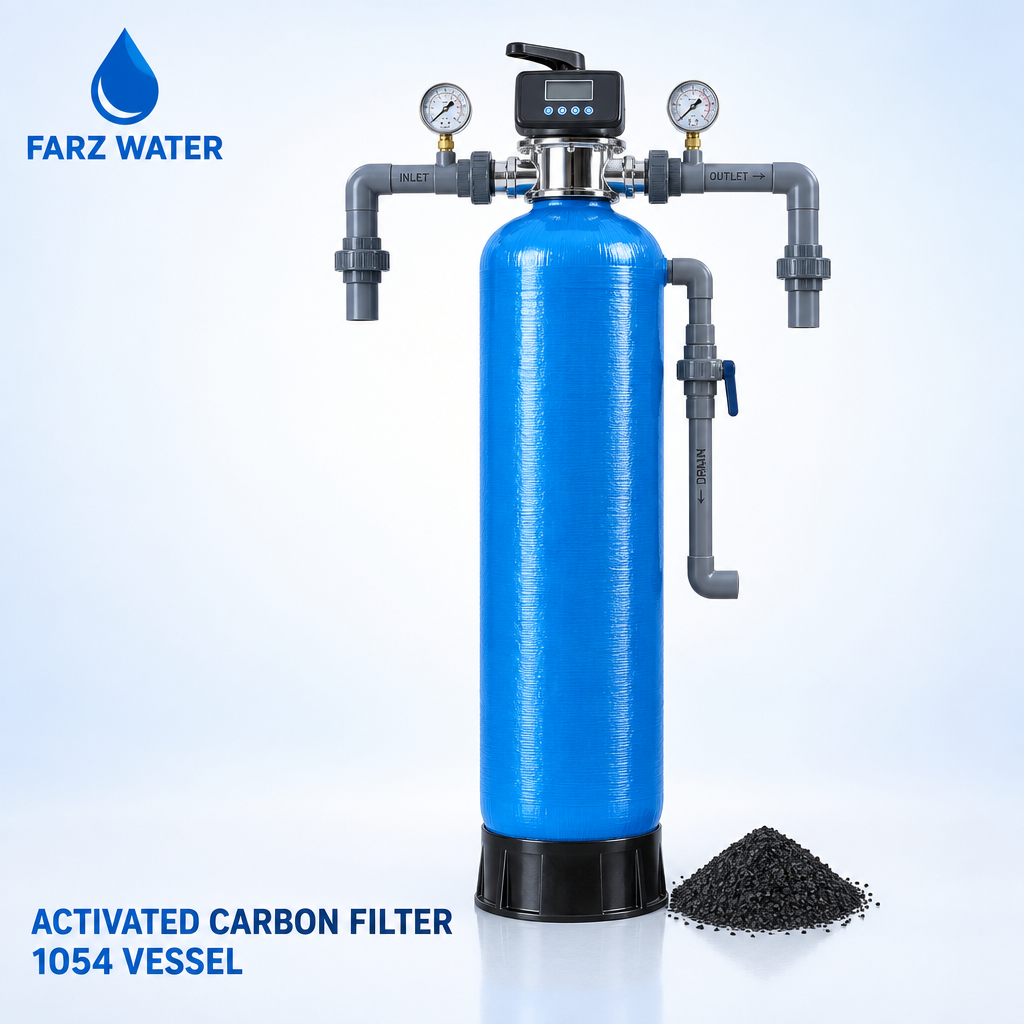
Activated carbon filter Oman — a 1054 FRP vessel filled with granular activated carbon and fitted with a backwash valve. It removes chlorine, taste, odour and dissolved organics from the whole building supply, and it is the stage that protects every RO membrane on the site from chlorine damage.
Vessel or cartridge
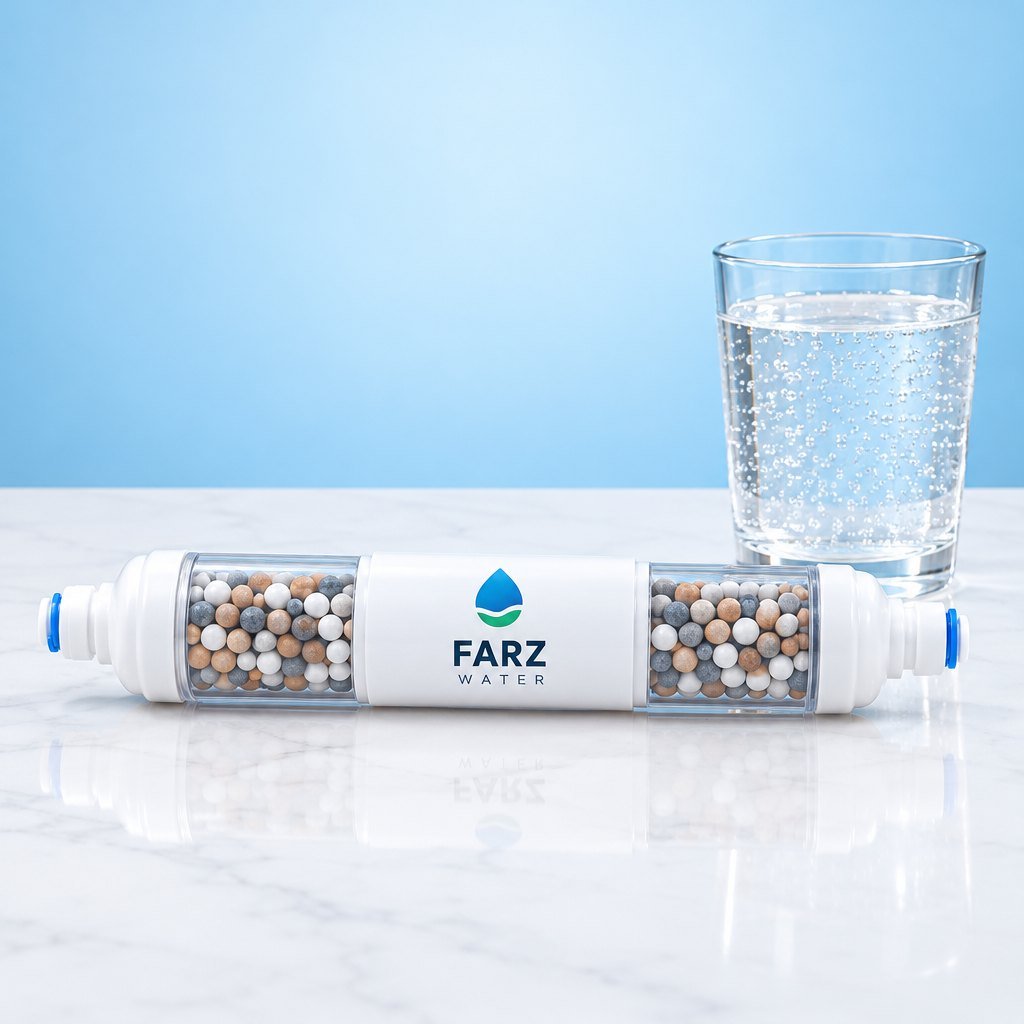
A cartridge does the same job at small scale and is replaced when exhausted. A vessel holds far more carbon, backwashes itself, and lasts years before the media is changed.
The dividing line is flow and load. Below about 1 cubic metre per hour, cartridges are simpler and cheaper to own. Above that, or on heavily chlorinated supply where cartridges would need changing monthly, an activated carbon filter Oman buildings install in vessel form works out considerably cheaper and stops the recurring service call.
What it removes
- Free chlorine, effectively completely on a correctly sized bed
- Chloramine, more slowly, needing catalytic carbon and longer contact
- Taste and odour compounds
- Trihalomethanes and other chlorination by-products
- Dissolved organics, pesticides, colour
Those by-products are among the parameters addressed in the WHO drinking water guidelines. It removes no hardness, no dissolved salts and no bacteria.
Sizing an activated carbon filter Oman conditions demand
Carbon works on contact time, expressed as empty bed contact time. Chlorine removal needs a minimum of 2 minutes; chloramine and organics need 5 to 10.
The 1054 vessel holds around 28 litres of carbon, giving roughly 2 minutes of contact at 0.85 cubic metres per hour. Run it at 2 cubic metres per hour and contact drops below a minute, chlorine breaks through, and the membrane behind it starts degrading while everything appears to be working.
This is the most common sizing error we correct. A vessel chosen on pipe size rather than on contact time will pass chlorine from the day it is commissioned.
Specification
- 10 by 54 inch FRP pressure vessel, rated to 10 bar
- Coconut shell granular activated carbon, 12 by 40 mesh, with support gravel
- Automatic or manual backwash control valve
- Service flow to approximately 0.9 cubic metres per hour for chlorine duty
- Inlet, outlet and drain connections with pressure gauges
- Larger 1252 and 1665 vessels available for higher flow
Backwash, and what it does not achieve
Backwashing lifts and reclassifies the bed, removing trapped particulates and preventing channelling and compaction. It does not regenerate the carbon. Adsorption capacity is consumed permanently, and a backwashed bed that has reached the end of its life is a clean bed that removes nothing.
Carbon is replaced every 12 to 24 months depending on inlet chlorine and throughput. The reliable check is a chlorine test on the outlet: when free chlorine appears there, the bed is finished regardless of how recently it was backwashed.
Bacteria in an exhausted bed
A carbon bed that has been left past its life is warm, wet and full of adsorbed organic nutrient, with no chlorine reaching it. That is an ideal environment for bacterial growth, and the outlet can carry a higher plate count than the inlet. On potable duty this is the reason to change media on schedule and, where the application demands it, to follow the carbon with UV disinfection.
Where it fits
After the sand filter which removes the particulate load, and before the softener and any RO plant. Protecting the RO membranes from chlorine is its most valuable function on a treatment train. At point-of-use scale the Big Blue carbon cartridge does the same job.
Request a quotation
Send your peak flow and inlet chlorine level and we will size the bed on contact time rather than pipe size, then quote vessel, media and valve installed. Call +968 9455 4533 or request a quote.

Reviews
There are no reviews yet.